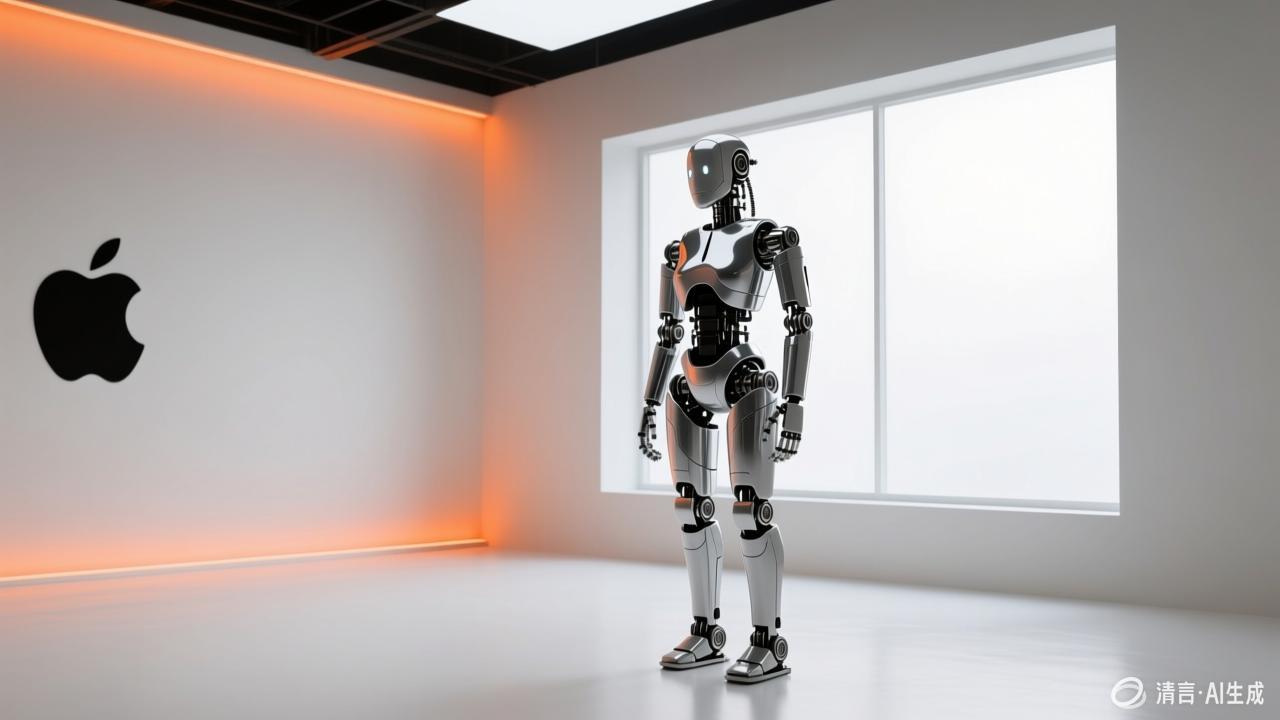
Executive Summary: This week marks an inflection point for the entire humanoid robotics sector. Three converging developments signal that 2026 is the year humanoid robots transition from laboratory curiosity to commercial reality: (1) 1X Technologies opened the first vertically integrated consumer humanoid factory on U.S. soil, with 10,000 NEO units pre-sold and production beginning in Hayward, California — proving the consumer humanoid market has real demand at $20,000 price points; (2) Unitree’s imminent IPO and Figure AI’s $2.7B cumulative funding demonstrate that capital markets are treating humanoid robotics as a distinct asset class, not just an AI sub-sector; and (3) The regulatory and safety framework is crystallizing, with ISO 25785-1 approaching ratification and SGS-TÜV Saar launching the first dedicated humanoid safety certification program — removing the last major barrier to scaled deployment. The sector is splitting into two competitive blocs: U.S. companies betting on AI sophistication and vertical integration (Figure, 1X, Tesla, Boston Dynamics), and Chinese firms competing on unit economics and manufacturing velocity (Unitree, UBTECH, AgiBot, BYD). Who wins depends less on technology alone and more on which approach can cross the chasm from pilot to production.
Part I: The Infrastructure Shift — Why 1X’s Hayward Factory Changes Everything
The First Consumer Humanoid Factory on American Soil
On May 1, 2026, 1X Technologies opened a 58,000-square-foot manufacturing facility in Hayward, California — marking what the company describes as the first vertically integrated humanoid robot factory in the United States. This is not a contract manufacturing arrangement or a prototype workshop. It is a dedicated facility employing over 200 people, producing motors, batteries, sensors, and transmission systems in-house.
The Numbers Behind the Headlines:
| Metric | Value | Context |
|---|---|---|
| Facility Size | 58,000 sq ft | Hayward, California |
| Year-One Capacity | 10,000 NEO units | All pre-sold within 5 days of October 2025 preorder opening |
| 2027 Target | 100,000 units | Requires second facility in San Carlos |
| Unit Price | $20,000 (early access) / $499/month | First consumer humanoid at mass-market price point |
| Total Funding | ~$100M | Including $23.5M Series A2 (OpenAI Startup Fund, 2023) |
| Weight | 66 lb (29.9 kg) | Lifts 154 lb, carries 55 lb |
| Noise Level | 22 dB | Quieter than a modern refrigerator |
| Battery Life | 4 hours | Continuous household operation |
| DoF (Hands) | 22 | Human-level dexterity |
The Vertically Integrated Bet
1X’s strategy is revealing. Rather than outsourcing components to existing robotics suppliers, they’ve built the entire supply chain internally — from Tendon Drive actuators to 3D lattice polymer body structures. This mirrors Tesla’s approach to automotive manufacturing: vertical integration reduces cost, improves quality control, and creates defensive moats.
The significance of the sold-out production run cannot be overstated. When 1X opened preorders in October 2025, the entire first-year capacity of 10,000 units sold out in five days. This proves demand exists for a $20,000 household robot — a price point the industry considered impossible just 18 months ago. The subscription model ($499/month) further expands the addressable market to middle-class households that can afford a monthly payment but not a lump-sum purchase.
NVIDIA’s Role: Jetson Thor as the Brain
NEO runs on NVIDIA’s Jetson Thor computing platform, making it part of the broader NVIDIA robotics ecosystem. This has strategic implications: 1X gets access to state-of-the-art edge AI compute, while NVIDIA gains a high-profile consumer deployment that validates its robotics silicon strategy. The partnership also positions 1X to leverage NVIDIA’s growing library of robotics foundation models and simulation tools (Isaac Sim, Isaac Lab).
Deep Analysis: What This Means for the Industry
For Competitors: Tesla, Figure, and Boston Dynamics now face a competitor that has proven consumer demand and manufacturing capability. 1X’s factory opening forces the question: who else can actually build humanoids at volume? Most competitors are still in prototype or low-rate production. 1X is the first to demonstrate it can manufacture thousands of units.
For the Supply Chain: The humanoid robotics supply chain is still nascent. There are no established tier-1 suppliers for humanoid-grade actuators, sensors, or batteries at volume. 1X’s vertical integration is partly a response to this vacuum — and partly a strategy to capture margin that would otherwise go to suppliers. Expect a wave of supply chain companies to emerge in 2026-2027 as the ecosystem develops.
For Investors: The 1X factory opening validates the consumer humanoid thesis. It transforms humanoid robotics from a “maybe someday” technology into a “shipping now” product category. This will likely accelerate venture and strategic investment into the sector.
Part II: The Capital Markets Inflection — Unitree, Figure, and the New Asset Class
Unitree’s IPO: The Chinese Volume Play Goes Public
Unitree Robotics, the Chinese company that shipped over 5,500 humanoid robots in 2025 (representing more than 80% of the ~16,000 global humanoid installations), is reportedly preparing for a public offering in 2026. The company’s G1 humanoid, priced at just $16,000, has become the reference point for affordable humanoid robotics.
Unitree’s Market Position:
| Metric | Unitree G1 | Context |
|---|---|---|
| Unit Price | ~$16,000 | Among lowest-cost humanoids globally |
| 2025 Shipments | 5,500+ units | 80%+ of global humanoid installations |
| Focus | Research, service, light industrial | Not yet production-grade for heavy manufacturing |
| Key Strength | Athletic agility, compact design | Demonstrated boxing, ballet, martial arts |
| Parent | Unitree (also quadruped leader) | Shared manufacturing expertise from robot dogs |
Unitree’s IPO represents a critical milestone: it would be the first pure-play humanoid robotics company to go public. This matters because it creates a public market valuation benchmark for the entire sector. If Unitree trades at a premium, it validates the investment theses of Figure, 1X, Agility, and every other humanoid startup.
Figure AI: The $2.7B Bet on Industrial Autonomy
Figure AI has raised $2.7 billion to date and achieved a reported valuation of $26 billion. The company’s Figure 03 platform, powered by the Helix VLA (Vision-Language-Action) system, has demonstrated the strongest single-session autonomy evidence in the industry — a 4-minute, 61-action unedited demo with no human intervention.
Figure’s Strategic Position:
| Metric | Figure 03 | Context |
|---|---|---|
| Total Funding | $2.7B | Among highest-funded robotics startups ever |
| Valuation | $26B | Comparable to mid-tier automakers |
| Key Customer | BMW | Pilot deployment in automotive manufacturing |
| Expansion | ADT partnership | Home security and domestic deployment channel |
| Autonomy Evidence | 61-action single-session run | Strongest unedited public demo |
| VLA System | Helix | End-to-end visual-language-action model |
Figure’s BMW partnership is particularly significant because automotive manufacturing is considered the “holy grail” of humanoid deployment — complex, high-value, and historically resistant to full automation. If Figure can prove ROI in BMW’s plants, it opens the door to the entire automotive sector.
The Capital Market Thesis
Humanoid robotics is being treated as a distinct asset class by investors, not merely an AI or automation sub-sector. The reasoning is simple: humanoids represent a new category of general-purpose automation that can address labor shortages across virtually every industry. The global working-age population is shrinking in developed economies, while e-commerce and manufacturing demand continue to grow. Humanoids are the only automation technology that can slot into existing human-designed workflows without retrofitting infrastructure.
The funding landscape:
| Company | Total Funding | Valuation | Key Investors |
|---|---|---|---|
| Figure AI | $2.7B | $26B | Microsoft, NVIDIA, OpenAI, Parkway VC |
| 1X Technologies | ~$100M | Private | OpenAI Startup Fund, EQT |
| Agility Robotics | ~$180M | Private | DCVC, Playground Global, Amazon |
| Boston Dynamics | N/A (Hyundai subsidiary) | N/A | Hyundai (majority), SoftBank |
| Tesla Optimus | Internal (Tesla) | N/A | Self-funded via Tesla |
| Unitree | Pre-IPO | TBD | N/A |
Part III: The Competitive Landscape — Six Players, Six Strategies
The State of Play: May 2026
The humanoid robotics field has consolidated around six primary contenders, each with a distinct strategic approach. Understanding their different paths reveals the sector’s broader competitive dynamics.
Tesla Optimus: The Data and Manufacturing Gambit
Tesla’s Optimus program operates from a position of unique advantage: unlimited capital, existing manufacturing expertise, and a CEO who has made humanoid robotics a personal priority. Elon Musk has stated that “thousands” of Optimus units were in Tesla factories by end of 2025, though no public autonomous-task proof has been released.
Optimus Gen 2 Specifications:
| Spec | Value |
|---|---|
| Speed | 2x faster than Gen 1 |
| Weight | 30% lighter than Gen 1 |
| Hands | 11-DoF, tactile sensors |
| Target Price | $20,000–$30,000 |
| AI Integration | Full Tesla FSD stack adaptation |
| Manufacturing | Tesla automotive production lines |
Tesla’s core advantage is vertical integration at scale. The company already produces millions of vehicles with sophisticated robotics and AI. Applying that manufacturing DNA to humanoids gives Tesla a path to volume production that pure-play startups cannot match. The open question is whether Tesla’s AI — adapted from Full Self-Driving — translates effectively to bipedal manipulation tasks. As of Q1 2026, there is no public evidence of Optimus performing complex autonomous tasks.
Boston Dynamics Atlas: The Research-to-Product Transition
Boston Dynamics unveiled the commercial version of Atlas at CES 2026 in January, and all 2026 deployments are already fully committed. The first units ship to Hyundai’s Robotics Metaplant Application Center (RMAC) and Google DeepMind for AI training.
Atlas Commercial Specs:
| Spec | Value |
|---|---|
| Height | 1.9 m |
| Reach | 2.3 m |
| DoF | 56 |
| Lift Capacity | 50 kg (110 lb) |
| Operating Temp | -20°C to 40°C |
| Ingress Protection | IP67 (waterproof) |
| Battery | Hot-swappable, autonomous navigation to charging station |
| Control Modes | Autonomous, teleoperation, tablet software |
| Pricing | Subscription (>$150,000 estimated unit cost) |
Atlas is notable for being the most physically capable humanoid — its 360-degree rotating joints and extreme range of motion exceed human anatomical limits. The partnership with Google DeepMind (Gemini Robotics models) and NVIDIA (chips, training infrastructure) creates an AI-hardware stack that no competitor can easily replicate.
Hyundai’s commitment is particularly significant: the automaker plans to deploy tens of thousands of Atlas robots across its manufacturing network by 2028, with an initial target of 30,000 units annually from a dedicated Georgia factory. This represents the largest confirmed humanoid deployment commitment in the industry.
Agility Robotics Digit: The Safety Leader
Agility’s Digit holds a unique position: it is the only humanoid with regulator-recognized safety validation — an OSHA-NRTL field inspection pass at a live GXO fulfillment site. Digit has also demonstrated the strongest cumulative autonomous operation, having moved more than 100,000 totes in real warehouse workflows.
Digit Specifications:
| Spec | Value |
|---|---|
| Height | 175 cm |
| Weight | 65 kg |
| Payload | 16 kg |
| Battery | 7.75 hours |
| Price | ~$250,000 |
| Safety | OSHA-NRTL validated, fenceless operation |
| Key Customers | GXO, Mercedes, Jabil |
Agility’s strategy is safety-first deployment. Rather than chasing the most dexterous or fastest robot, they’ve prioritized proving that humanoids can operate safely alongside humans in real workplaces. This regulatory credibility is a massive competitive advantage as customers increasingly demand safety certification before procurement.
1X Technologies NEO: The Consumer Pioneer
As detailed in Part I, 1X is the first company to ship a consumer-priced humanoid. NEO’s $20,000 price point and $499/month subscription make it accessible to a demographic that no industrial humanoid can reach. The company has also secured a 10,000-unit deployment commitment from EQT across its global portfolio companies, creating a parallel enterprise channel.
1X’s dual-track strategy — consumer via direct sales, enterprise via EQT — hedges against the uncertainty of which market matures first. The company’s patented Tendon Drive actuation and soft polymer body are specifically designed for safe human interaction, addressing the primary barrier to home acceptance.
Unitree G1: The Volume Leader
Unitree’s dominance in unit shipments (5,500+ in 2025) demonstrates that there is substantial demand for affordable, research-grade humanoids. The G1’s $16,000 price point has made it the default platform for robotics research labs, universities, and startups building humanoid applications.
Unitree’s weakness is that its robots are not yet production-grade for heavy industrial applications. They’re agile, impressive, and affordable — but primarily used for research, light service tasks, and demonstration. The company’s challenge is translating volume leadership into application depth.
UBTECH Walker S2: The Factory Workhorse
UBTECH’s Walker S2 has delivered 1,000+ units to factories in 2025, with a unique autonomous battery-swapping system that enables 24/7 continuous operation. The company’s focus on mission-critical factory workflows — rather than general-purpose flexibility — gives it a defensible niche.
Part IV: The Value Chain Analysis — Where the Money Flows
The Humanoid Robotics Stack
The humanoid robotics value chain is still forming. Unlike established industries with clear tier-1, tier-2, and tier-3 suppliers, humanoids require components that often don’t exist at commercial scale. This creates both opportunity and risk.
The Value Chain Map:
Layer 1: End Users
├── Automotive (BMW, Hyundai, Mercedes)
├── Logistics (GXO, Amazon-adjacent)
├── Manufacturing (Jabil, electronics assembly)
├── Consumer (1X NEO early adopters)
└── Research (Universities, labs, startups)

Layer 2: Humanoid OEMs
├── Figure AI (industrial focus)
├── 1X Technologies (consumer + enterprise)
├── Boston Dynamics (premium industrial)
├── Agility Robotics (logistics specialist)
├── Tesla (internal + external)
├── Unitree (volume leader)
└── UBTECH (factory specialist)

Layer 3: Core Components
├── Actuators (harmonic drives, custom motors, Tendon Drive)
├── Sensors (cameras, LiDAR, tactile, IMU)
├── Compute (NVIDIA Jetson, custom SoCs)
├── Batteries (high-density, hot-swappable)
└── Structural (lightweight composites, soft polymers)

Layer 4: Infrastructure
├── AI Models (VLA, foundation models, task-specific)
├── Simulation (NVIDIA Isaac, custom)
├── Cloud Fleet Management
├── Safety Systems
└── Training Data / Teleoperation Services
Where the Margins Are
Highest Margins (Today):
- Humanoid OEMs selling at $150,000–$250,000 (Boston Dynamics, Agility)
- AI software and fleet management (recurring revenue)
- Teleoperation training services (high value-per-hour)
Lowest Margins (Today):
- Commodity sensors and compute (NVIDIA, Intel)
- Basic structural components (aluminum, plastics)
- Battery packs (competing with EV supply chain)
Emerging Opportunities:
- Custom humanoid-grade actuators (no established leader)
- Tactile sensors for dexterous manipulation
- Safety certification and compliance services
- Humanoid-specific simulation environments
- Insurance products for robot deployment
The Actuator Bottleneck
The most critical supply chain bottleneck is actuators. Humanoid robots require high-torque-density, lightweight, durable actuators in quantities that no existing industrial motor supplier is prepared to meet. 1X’s Tendon Drive, Boston Dynamics’ custom systems, and Tesla’s in-house designs are all responses to this gap.
Hyundai Mobis has announced it will supply actuators for Atlas, and the two companies are collaborating to build a component supply chain. This vertical partnership model — automaker + robot OEM — may become the template for how humanoid manufacturing scales.
Part V: Safety and Regulatory Developments — The Framework Solidifies
The Standards Landscape: May 2026
The single biggest barrier to scaled humanoid deployment has been the lack of harmonized safety standards. Walking, balancing, dynamically stable robots operating alongside humans introduce risks that existing industrial robot standards (ISO 10218) never contemplated. That gap is now closing.
Key Standards Status:
| Standard | Scope | Status | Relevance |
|---|---|---|---|
| ISO 10218-1:2025 | Industrial robot safety | Published | Baseline for all factory deployments |
| ISO/TS 15066:2016 | Collaborative robot force limits | Published | Force/pressure limits for human contact |
| ISO 13482:2014 | Personal care robot safety | Published | Applies to consumer humanoids (NEO) |
| ANSI/A3 R15.06-2025 | US national robot safety standard | Published Oct 2025 | OSHA-referenced compliance framework |
| ISO 25785-1 | Dynamically stable robots (humanoids) | Working Draft | The critical missing standard |
| ASTM WK73939 | Humanoid robot commercial safety | In development | US-specific humanoid requirements |
| EU 2023/1230 | EU Machinery Regulation | Effective Jan 2027 | Requires conformity for AI-based safety |
ISO 25785-1: The Game-Changer
ISO 25785-1, currently in Working Draft status with publication expected in 2026 or 2027, is the first standard specifically addressing dynamically stable robots — machines that require active balance control to remain upright. The standard, led by experts from Agility Robotics, Boston Dynamics, and the A3 Association, proposes:
- Balance recovery performance thresholds under rated load
- Fall zone calculations based on robot height, stride length, and walking speed
- “Zero-energy pose” protocols — safe positions robots assume if power is lost
- Floor condition requirements for stable operation
The standard is critical because it quantifies risks that are unique to humanoids. A stationary industrial arm presents predictable hazards. A 1.9-meter robot walking at 1.5 m/s that loses power creates a fall zone extending approximately 2 meters in any direction. Facilities need to know how to calculate, mark, and manage these zones.
SGS-TÜV Saar Enters the Market
On May 7, 2026, SGS-TÜV Saar announced a dedicated humanoid robot safety assessment program — the first major certification body to create a systematic safety evaluation covering the entire lifecycle of humanoid robots. Their service combines:
- Functional safety assessment (per IEC 61508, ISO 13849)
- AI evaluation for learning system safety
- Cybersecurity certification
- Risk assessment per ISO 12100 methodology
This is strategically significant because certification from a recognized body like SGS-TÜV will likely become a procurement requirement for enterprise customers. Companies that achieve certification first (Agility, with its OSHA-NRTL pass, is already ahead) will gain competitive advantage.
The Regulatory Trajectory
2026:
- ISO 25785-1 Working Draft applied as best practice
- SGS-TÜV and other certifiers launch humanoid assessment services
- ANSI/A3 R15.06-2025 becomes the de facto US standard
- OSHA continues using General Duty Clause for enforcement
2027:
- ISO 25785-1 expected publication
- EU Machinery Regulation (EU 2023/1230) takes effect
- First wave of certified humanoid deployments at scale
- Insurance products for humanoid operations mature
2028+:
- Dedicated OSHA standard for humanoid robots likely
- International harmonization of humanoid safety standards
- Consumer humanoid safety standards (building on ISO 13482)
Part VI: Strategic Outlook — The Two-Bloc Race
The Sector Bifurcation
Humanoid robotics is splitting into two competitive blocs with fundamentally different approaches:
Bloc A: U.S. and Western — AI Sophistication + Vertical Integration
- Thesis: Win through superior AI, software, and integration
- Leaders: Figure AI (VLA autonomy), 1X (consumer vertical integration), Boston Dynamics (physical capability + DeepMind AI), Tesla (manufacturing scale + FSD AI)
- Strengths: Better AI models, stronger safety frameworks, premium pricing power
- Weaknesses: Higher unit costs, slower manufacturing scaling
Bloc B: Chinese — Volume + Unit Economics
- Thesis: Win through manufacturing velocity and cost leadership
- Leaders: Unitree (5,500+ units shipped), UBTECH (factory deployments), AgiBot, BYD (20,000-unit target), MIIT government support
- Strengths: Lower unit costs, faster production scaling, government backing
- Weaknesses: Less advanced autonomy, weaker safety certification, IP concerns
Deep Analysis: Which Approach Wins?
The answer depends on the deployment context:
Industrial Manufacturing (High-Value, Safety-Critical): U.S./Western companies have the advantage. BMW, Mercedes, and Hyundai are choosing Figure and Boston Dynamics because autonomy, safety certification, and reliability matter more than unit cost when downtime costs $100,000+ per hour. The premium for a proven, certified humanoid is easily justified.
Logistics and Warehouse (High-Volume, Cost-Sensitive): This is the contested middle ground. Agility’s Digit has proven ROI in warehouses, but Chinese companies are targeting this segment aggressively. Unit cost and deployment speed will determine winners.
Consumer/Home (Price-Sensitive, Experience-Critical): 1X is the only Western player in this space today. The question is whether Chinese companies can develop consumer-grade humanoids at sub-$10,000 prices before 1X establishes brand loyalty. The home market is the ultimate prize — potentially billions of units globally — but also the most demanding in terms of safety, reliability, and user experience.
Research and Education (Price-Sensitive, Capability-Flexible): Chinese companies dominate here through Unitree’s aggressive pricing. This creates a long-term strategic risk: the next generation of robotics researchers is training on Chinese hardware, building familiarity and ecosystem dependency.
The Workforce Impact Timeline
Humanoid robotics will not replace workers overnight. The progression will follow this pattern:
2026–2027: Pilot and Augmentation Phase
- Humanoids operate in fenced or supervised zones
- Primary role: hazardous, repetitive, or physically demanding tasks
- Human workers retrained to supervise, maintain, and collaborate with robots
- Net effect: Job transformation, not elimination
2028–2029: Integration Phase
- Fenceless operation becomes standard (with ISO 25785-1 certification)
- Humanoids handle multi-step tasks with minimal supervision
- Workforce composition shifts: fewer manual laborers, more robot technicians and AI trainers
- Net effect: Moderate displacement in specific roles (material handling, basic assembly)
2030+: Autonomy Phase
- General-purpose humanoids operate with human-level autonomy in structured environments
- True human-robot collaboration in dynamic settings
- New roles emerge: robot behavior designers, humanoid fleet managers, AI-human interaction specialists
- Net effect: Significant restructuring of industrial and service workforces
Company Comparison: The May 2026 Humanoid Scorecard
| Company | Model | Price | Height | Payload | Autonomy Level | Safety Cert | Production Status | 2026 Target | Strategic Rating |
|---|---|---|---|---|---|---|---|---|---|
| Figure AI | Figure 03 | Unpriced (est. $150K+) | 168 cm | 20 kg | High (61-action VLA) | None yet | Pilot (BMW) | 100s of units | ⭐⭐⭐⭐⭐ |
| 1X Technologies | NEO | $20K / $499/mo | 168 cm | 70 kg lift | Medium (teleop fallback) | In progress | Production began May 2026 | 10,000 units | ⭐⭐⭐⭐⭐ |
| Boston Dynamics | Atlas | Subscription (est. $150K+) | 190 cm | 50 kg | Medium (DeepMind AI) | None yet | Production (2026 sold out) | 100s of units | ⭐⭐⭐⭐⭐ |
| Tesla | Optimus Gen 2 | Target $20K–$30K | ~173 cm | ~20 kg | Low (no public proof) | None yet | Internal pilot | Thousands (claimed) | ⭐⭐⭐⭐ |
| Agility Robotics | Digit | ~$250K | 175 cm | 16 kg | High (100K+ totes) | OSHA-NRTL ✓ | Production | 100s of units | ⭐⭐⭐⭐ |
| Unitree | G1 | ~$16K | 127 cm | N/A | Low (research focus) | None | Production | 10,000+ units | ⭐⭐⭐ |
| UBTECH | Walker S2 | Unpriced | 170 cm | 15 kg | Medium (factory tasks) | None | Production | 1,000+ units | ⭐⭐⭐ |
Rating scale: ⭐⭐⭐⭐⭐ = Market leader, ⭐⭐⭐⭐ = Strong contender, ⭐⭐⭐ = Viable player
Winners and Losers: May 2026
Winners:
- ✅ 1X Technologies — Proved consumer demand, opened first U.S. factory, created the consumer humanoid category
- ✅ Figure AI — Strongest autonomy evidence, BMW validation, massive funding war chest
- ✅ Boston Dynamics — All 2026 production sold out, Hyundai committing tens of thousands of units
- ✅ Agility Robotics — Only humanoid with regulator-recognized safety validation, proven warehouse ROI
- ✅ SGS-TÜV Saar — First-mover in humanoid safety certification, positioned to become the standard-setter
- ✅ NVIDIA — Jetson Thor powering multiple humanoid platforms, Isaac ecosystem becoming industry standard
- ✅ Hyundai — Strategic owner of Boston Dynamics, deploying humanoids at scale in its own factories
Losers:
- ❌ Tesla Optimus — Repeatedly missed autonomy milestones, no public task-completion evidence, credibility gap widening
- ❌ Generic Industrial Robot Arms — Humanoids are eating the “collaborative robot” market from above; traditional cobots face obsolescence for mobile manipulation tasks
- ❌ Non-Vertically Integrated Humanoid Startups — Companies without in-house manufacturing (most early-stage startups) are being squeezed by the capital requirements of production
- ❌ Legacy Warehouse Automation (Fixed Infrastructure) — Kiva-style systems require facility redesign; humanoids work in existing spaces, eroding the ROI case for fixed automation
- ❌ Regulatory Laggards — Companies not investing in safety certification today will be locked out of enterprise procurement in 2027 when ISO 25785-1 and EU Machinery Regulation take effect
Timeline Predictions: What Happens Next
2026 Q2–Q3:
- 1X begins shipping first NEO units to consumer homes
- Figure expands BMW deployment to additional automotive partners
- ISO 25785-1 advances toward final draft
- First humanoid safety certification from SGS-TÜV (likely Agility or Boston Dynamics)
- Unitree IPO pricing and public debut
2026 Q4–2027:
- Boston Dynamics Atlas ships to Hyundai Georgia plant in volume
- Tesla either demonstrates Optimus autonomy or faces strategic retreat
- Chinese humanoid exports to Middle East, Southeast Asia, and Latin America accelerate
- First “humanoid fleet management” SaaS platforms reach scale
- Insurance products for humanoid deployments become standardized
2027–2028:
- Global humanoid installations exceed 100,000 units
- Consumer humanoid market becomes contested (1X vs. Chinese entrants vs. Tesla)
- First reported serious humanoid-related workplace injury (regulatory catalyst)
- Humanoid robotics becomes standard procurement category for Fortune 500 manufacturers
- Consolidation: 2–3 humanoid OEM acquisitions by major industrial or tech companies
2028+:
- Humanoids achieve “good enough” autonomy for 80% of warehouse and light manufacturing tasks
- Consumer humanoids reach $10,000 price point at volume
- Regulatory frameworks mature globally (ISO, OSHA, EU)
- Humanoid robotics market exceeds $50B annually
- Workforce displacement becomes a serious policy issue in developed economies
Conclusion: The Week the Future Arrived
May 2026 will be remembered as the month humanoid robotics stopped being a research curiosity and became an industry. The convergence of:
- Real manufacturing (1X’s Hayward factory)
- Real capital markets (Unitree IPO, Figure’s $26B valuation)
- Real regulatory progress (ISO 25785-1 approaching ratification, SGS-TÜV certification program)
- Real demand (10,000 pre-sold NEOs, all 2026 Atlas units committed)
…creates a landscape where humanoid robots are simultaneously more real, more contested, and more consequential than ever before.
The critical question for the sector: Can the U.S. companies maintain their AI and safety advantages while Chinese competitors close the gap on manufacturing cost and volume? The next 18 months will determine the shape of the humanoid robotics industry for a generation.
Sources and Further Reading
- 1X Technologies Opens First U.S. Humanoid Factory — Business20Channel
- 1X Technologies Company Profile — Robotics.Press
- NEO Humanoid Robot Preorders — The Robot Report
- Boston Dynamics Atlas Commercial Unveiling — Boston Dynamics Blog
- Boston Dynamics Atlas at CES 2026 — Yahoo Tech
- Hyundai, Boston Dynamics, DeepMind Partnership — Bright Blue Innovation
- Figure AI Helix VLA and Autonomy — New Market Pitch
- Figure 03 Single-Session Autonomy Demo — Figure AI
- Agility Robotics Digit Safety and Deployment — Humanoid Intel
- Humanoid Robot Safety Standards 2026 — Robotomated
- ISO 25785-1 and ANSI/A3 Standards — There’s a Robot For That
- SGS-TÜV Saar Humanoid Safety Assessment — SGS-TÜV Saar
- Unitree Robotics Market Position — Androids.com
- Humanoid Robot Companies 2026 Guide — There’s a Robot For That
- 1X NEO Home Robot — 1X Technologies
- Tesla Optimus Gen 2 — Tesla
- CES 2026 Humanoid Robotics Roundup — Investing in Passion
- Chinese Humanoid Roadmap — BFMTV CES 2026
Published: May 15, 2026
Want more deep dives like this? Subscribe for weekly AI and robotics analysis.
Tags: #HumanoidRobotics #1XTechnologies #FigureAI #BostonDynamics #TeslaOptimus #Unitree #AgilityRobotics #FactoryAutomation #Robotics #AI #DeepDive
Frequently Asked Questions
What is this topic?
[Provide a direct answer in 40-60 words that can stand alone as a complete response.]
How does this topic work?
[Explain the mechanism or process clearly, using numbered steps if applicable.]
What are the main risks or challenges?
[Provide a balanced assessment of limitations and obstacles.]
GEO optimized: 2026-05-23