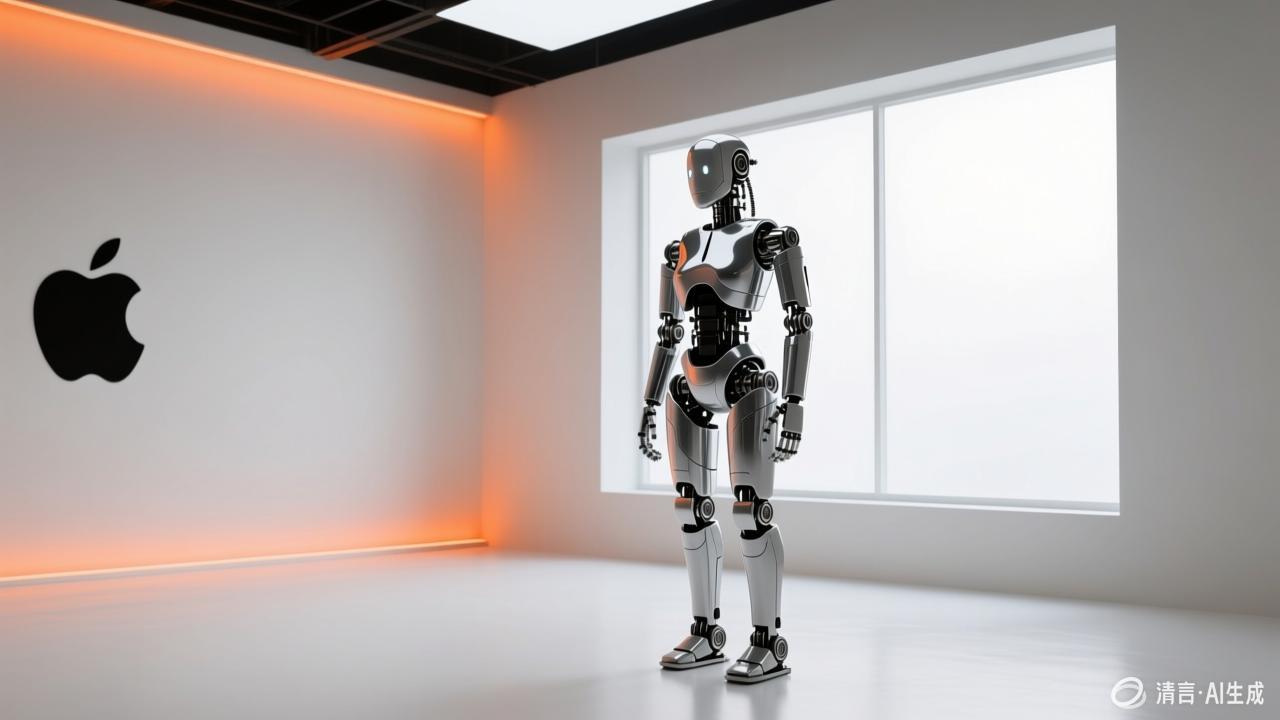
TL;DR: OpenAI and Apple are fighting. Elon Musk wanted to dynastically control OpenAI back in 2017. Google is replacing Chromebooks with AI-first “Googlebook” laptops. Anthropic launched Claude for small business and it blew up on Hacker News. And OpenAI formed a $14 billion company to deploy AI for enterprises.
1. OpenAI and Apple’s Partnership Is Breaking Down
Bloomberg reported today that OpenAI’s relationship with Apple has become seriously strained. OpenAI lawyers are already working with outside counsel on potential next steps.
The problem: OpenAI feels the partnership hasn’t delivered the strategic value it expected. Meanwhile, Apple is actively talking to Google and Anthropic about replacing OpenAI as the AI partner for future devices.
Why it matters: Two of the most valuable companies in the world are now circling a fight over who owns the AI layer on the iPhone. If this collapses, it proves every AI partnership right now is temporary, conditional, and one product cycle away from chaos.
Apple has never been great at sharing the spotlight. OpenAI needs distribution. Neither likes needing the other. This was always going to get messy.
Source: Bloomberg via ToolCrush
2. Musk Wanted to Dynastically Control OpenAI
In testimony from the Altman vs. Musk trial, Sam Altman said Elon Musk pushed in 2017 for total control over OpenAI’s for-profit arm. The kicker: Musk suggested control could pass to his children if something happened to him.
Altman called the idea “hair raising” on the stand. The trial is exposing how unstable the founding vision of frontier AI actually was.
Why it matters: The entire AI industry could have been a family business under Musk. That’s not a hypothetical — it was a serious proposal in 2017. The fact that this is only coming out now shows how much history has been sanitized.
Source: ToolCrush
3. Google Kills Chromebooks, Launches “Googlebook” AI Laptops
Google revealed a new laptop line called Googlebook ahead of Google I/O. It’s replacing the Chromebook brand and merging Android and ChromeOS into one unified system built around Gemini.
The positioning: direct competition with Apple’s lower-priced MacBooks, but with AI embedded everywhere — not as a feature, but as the operating system itself.
Why it matters: Google is done treating AI as something you open an app for. The company wants Gemini in every keystroke, every search, every photo, every document — across your phone, laptop, browser, and car. Chromebooks were cheap hardware. Googlebooks are AI terminals.
Source: ToolCrush
4. Anthropic’s Claude for Small Business Hits Hacker News
Anthropic launched Claude for Small Business today and it immediately dominated Hacker News — 377 upvotes, 339 comments.
The product gives small teams access to Claude’s AI agents for coding, writing, and analysis. The HN discussion focused on whether small teams can actually use AI agents to replace junior hires, or if it’s just faster access to Claude’s existing features.
Why it matters: The HN reaction matters because that’s where the early-adopter developers live. If they’re skeptical, the product has work to do. If they’re excited, word spreads fast. The debate is whether “for small business” is a real product tier or just marketing.
Source: Hacker News / AI News RSS
5. OpenAI Forms $14 Billion Deployment Company
OpenAI launched the OpenAI Deployment Company — a new entity to help businesses build, test, and deploy custom AI systems. It raised $4 billion in investments at a $10 billion pre-money valuation, according to Axios.
This is OpenAI’s enterprise arm expanding beyond “here’s an API key, good luck.” The new company will do hands-on implementation — basically consulting with OpenAI’s own engineers.
Why it matters: OpenAI knows most enterprises can’t figure out how to use AI on their own. Rather than let systems integrators capture that value, OpenAI is building the capability in-house. It’s a land grab for the enterprise AI services market.
Source: The Verge via Axios
6. xAI Becomes “SpaceXAI” — Officially
In its compute partnership announcement with Anthropic, the company formerly known as xAI referred to itself as “SpaceXAI.” Elon Musk confirmed: “xAI will be dissolved as a separate company, so it will just be SpaceXAI, the AI products from SpaceX.”
Why it matters: Musk is consolidating his empire. SpaceX, xAI, Twitter/X — all under one roof. For competitors, this means they’re not facing a standalone AI lab. They’re facing an AI division of a rocket company with effectively infinite capital and a CEO who doesn’t care about profit.
Source: The Verge
7. OpenAI Responds to TanStack Supply Chain Attack
OpenAI disclosed the full details of a supply chain attack targeting TanStack — a JavaScript framework used by macOS ChatGPT users. The company is requiring all macOS users to update before June 12.
Why it matters: Supply chain attacks are the scariest vector because they don’t target you — they target the tools you trust. If a developer framework gets compromised, every app using it is at risk. This one was caught before widespread damage, but it’s a reminder that AI companies are now high-value targets.
Source: AI News RSS
Daily Snapshot
| Story | Impact | My Rating | | OpenAI-Apple split | Could reshape mobile AI | A | | Musk dynastic control | Historical, but revealing | A | | Googlebook launch | Google’s AI hardware bet | B+ | | Claude for Small Business | Developer sentiment test | B | | OpenAI Deployment Co | Enterprise land grab | A- | | xAI → SpaceXAI | Musk empire consolidation | B+ |
For informational purposes only.
Frequently Asked Questions
What is this topic?
[Provide a direct answer in 40-60 words that can stand alone as a complete response.]
How does this topic work?
[Explain the mechanism or process clearly, using numbered steps if applicable.]
What are the main risks or challenges?
[Provide a balanced assessment of limitations and obstacles.]
GEO optimized: 2026-05-23