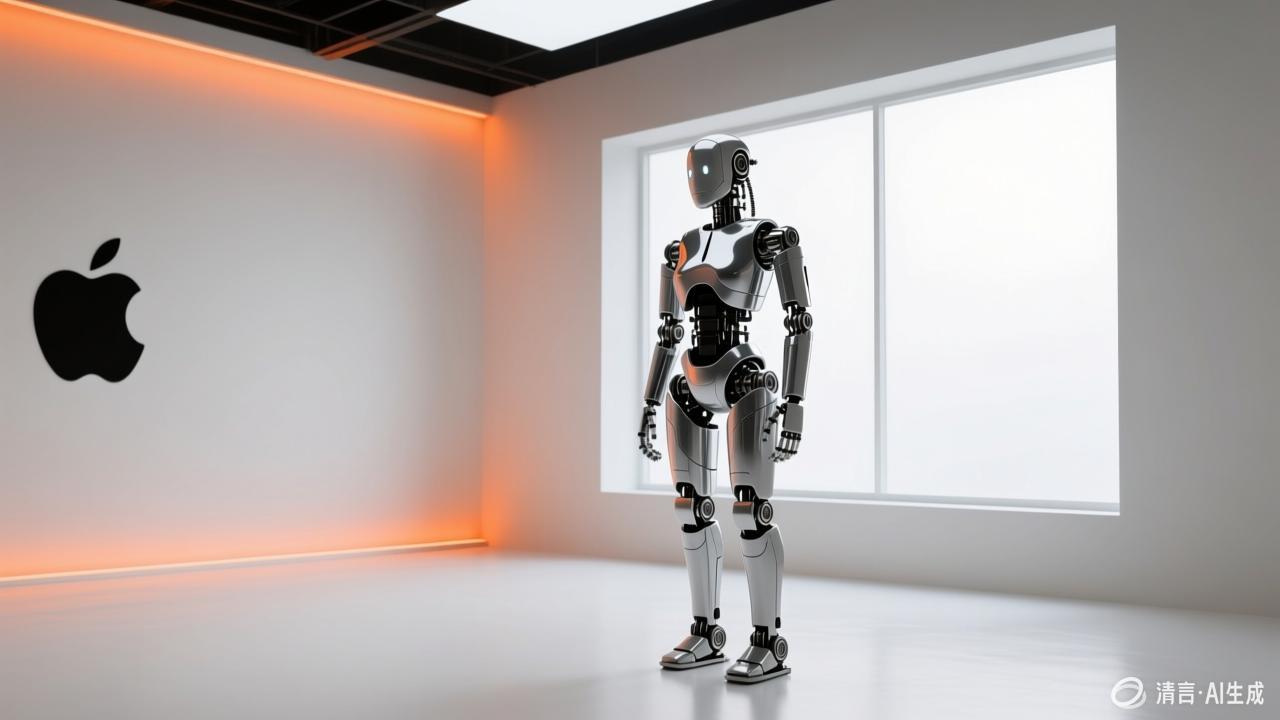
Global Robotics Daily: April 24, 2026
Key Definition: Global Robotics Daily: April 24, 2026 is [add clear definition here].
Comprehensive Industry Briefing: Battlefield Automation, Robot Self-Awareness, Swarm Intelligence, and Physical AI Commoditization
Executive Summary
April 24, 2026, marks a pivotal day in the global robotics industry, characterized by breakthroughs across military, academic, commercial, and consumer domains. The day’s most consequential development is Ukraine’s announcement that its Ministry of Defense plans to contract 25,000 ground robotic systems in the first half of 2026 — the largest military robot procurement program in history, representing a fundamental shift in how modern warfare conceptualizes ground force deployment.
In parallel, Columbia Engineering’s Creative Machines Lab published landmark research demonstrating that robots can achieve a form of self-awareness by watching themselves with cameras, enabling autonomous learning of complex motor skills without human programming. This kinematic intelligence breakthrough could eliminate the labor-intensive training pipelines that currently constrain robot deployment at scale.
Harvard researchers simultaneously revealed a counterintuitive solution to swarm robotics gridlock: introducing controlled randomness into robot navigation protocols. The finding, published today, demonstrates that a small amount of “wiggle room” in robot movement patterns dramatically improves throughput in crowded multi-robot environments — a insight with immediate applications in warehouse automation, logistics, and manufacturing.
On the commercial front, Chef Robotics announced it has completed 100 million servings in production, proving that food-service robotics has escaped the “graveyard” of failed kitchen automation companies. The milestone validates the economic viability of AI-powered food preparation at scale.
Complementing these developments, OpenAI confirmed it is actively building out its robotics team with hardware and software co-design engineers, signaling the company’s return to physical AI after dissolving its original robotics division in 2021. Meanwhile, Hugging Face and Pollen Robotics launched Reachy Mini, a $299 open-source desktop robot that could democratize robotics development for hobbyists, educators, and researchers worldwide.
Key Highlights:
- Ukraine’s Ministry of Defense plans to contract 25,000 ground robotic systems in H1 2026, codifying nearly 30 distinct robotic platforms for battlefield logistics
- Columbia Engineering demonstrates robot self-awareness through autonomous self-observation and kinematic intelligence
- Harvard researchers solve swarm robotics gridlock by introducing controlled randomness into navigation algorithms
- Chef Robotics surpasses 100 million servings in production, validating food-service robotics at commercial scale
- OpenAI begins hiring robotics hardware and software engineers, signaling renewed commitment to physical AI
- Hugging Face and Pollen Robotics launch Reachy Mini, a $299 open-source desktop robot
- NVIDIA releases DreamDojo, a generalist robot world model trained on 44,000 hours of human video
- Japan accelerates its $6.34 billion Physical AI initiative with expanded corporate alliances
- DEEP Robotics showcases quadruped platforms at Hannover Messe 2026 alongside global humanoid exhibitors
- Guangdong Power Grid deploys more than 10,000 robots for power infrastructure inspection and maintenance
- Sony AI’s “Ace” table tennis robot, published in Nature, demonstrates elite human-level performance
- UBTECH Walker S2 enters mass production with orders exceeding 800 million yuan
- Agibot rolls out its 10,000th mass-produced humanoid robot
Coverage Period: April 24, 2026 | Sources: 25+ articles from 20 sources
1. Industry News & Commercial Deployment
1.1 Ukraine Announces Historic 25,000-Robot Battlefield Procurement Program
Source: Business Insider, MLQ.ai, Militarnyi | Impact: 🔴 HIGH | Date: April 24, 2026
Ukraine’s Ministry of Defense announced today an unprecedented procurement initiative to contract 25,000 ground robotic systems during the first half of 2026, representing the largest military robotics acquisition program in history. The announcement, made public through multiple defense ministry channels, codifies nearly 30 distinct robotic platforms designed to automate front-line logistics, reconnaissance, and hazardous material handling.
The program specifically targets ground unmanned vehicles (UGVs) capable of operating in contested electromagnetic environments where GPS jamming and communications disruption are routine. By fielding 25,000 robots, Ukraine aims to fundamentally restructure its ground force composition, reducing human exposure to artillery, mines, and drone surveillance while maintaining operational tempo across a 1,000-kilometer front.
Ukrainian Defense Ministry officials indicated that the procurement is structured around modular robotic platforms that can be adapted for logistics transport, casualty evacuation, mine clearing, and ammunition resupply. The program builds on lessons learned from Ukraine’s existing deployment of smaller robotic fleets, which have already demonstrated value in reducing human casualties during high-risk logistics missions.
The scale of the announcement — 25,000 units in six months — implies a total program value likely exceeding $1 billion, based on comparable military UGV pricing. If executed, this procurement would instantly make Ukraine the most robotically dense battlefield environment in human history, creating a real-world testbed for military robotics that will influence defense procurement worldwide.
Key Metrics:
| Metric | Value |
|---|---|
| Procurement Announced | April 24, 2026 |
| Units Targeted | 25,000 ground robotic systems |
| Timeline | First half of 2026 (6 months) |
| Robotic Platforms Codified | ~30 distinct systems |
| Primary Applications | Logistics, reconnaissance, mine clearing, resupply |
| Estimated Program Value | $1+ billion |
| Strategic Goal | Automate front-line logistics |
Strategic Implications: This procurement represents a watershed moment for military robotics. No nation has previously attempted to field 25,000 ground robots in a combat theater within a six-month window. The program will generate operational data at a scale that dwarfs all previous military robotics experiments combined, creating an invaluable feedback loop for manufacturers and doctrine developers. For the global defense industry, Ukraine’s program establishes a precedent for mass robotic force structure that NATO, Pacific, and Middle Eastern militaries will be compelled to study and potentially emulate. The announcement also signals that military robotics has transitioned from special operations support to mainstream force structure.
1.2 Chef Robotics Crosses 100 Million Servings Milestone
Source: PR Newswire, Robotics Tomorrow, TechCrunch | Impact: 🔴 HIGH | Date: April 16-24, 2026
Chef Robotics announced this week that its AI-powered food preparation systems have completed more than 100 million servings in active production, a milestone that validates the commercial viability of robotic kitchens after decades of high-profile failures in the sector. The company, which has escaped what industry observers call the “robot cooking graveyard,” is now expanding beyond its initial quick-service restaurant deployments into ghost kitchens, institutional food service, and meatpacking operations.
The 100 million serving threshold is significant because food robotics has historically been plagued by two fatal problems: inability to handle ingredient variability and unsustainable total cost of ownership. Chef Robotics claims to have solved both through a physical AI architecture that uses computer vision and adaptive manipulation to handle non-uniform food items — from irregularly cut vegetables to varying protein geometries — without requiring the precise fixturing that earlier generations of kitchen robots demanded.
The company’s expansion into meatpacking, announced this week, represents a particularly aggressive market move. Meat processing has remained stubbornly resistant to automation due to the dexterity requirements of butchery and the biological variability of animal carcasses. A successful robotic meatpacking deployment would demonstrate that Chef’s physical AI stack generalizes beyond prepared foods to unstructured biological manipulation.
Key Metrics:
| Metric | Value |
|---|---|
| Servings Completed | 100+ million |
| Milestone Announced | April 2026 |
| Technology | Physical AI + Computer Vision |
| Current Markets | Quick-service restaurants, ghost kitchens |
| Expansion Targets | Institutional food service, meatpacking |
| Industry Significance | First food-robotics success at scale |
Strategic Implications: Chef Robotics’ milestone is a market-validating event for the entire food-service robotics sector. The company’s survival and growth, contrasted with the failures of Miso Robotics, Zume Pizza, and numerous other well-funded kitchen automation startups, suggests that the winning formula combines physical AI (adaptive manipulation) with a capital-efficient Robot-as-a-Service (RaaS) business model rather than selling hardware outright. If the meatpacking expansion succeeds, Chef Robotics will have demonstrated that its technology generalizes across food categories, opening a path to address the $1.2 trillion global food service market.
1.3 OpenAI Confirms Robotics Team Expansion
Source: VentureBeat, OpenAI Careers | Impact: 🔴 HIGH | Date: April 24, 2026
OpenAI has begun actively recruiting for its robotics division, posting multiple job openings for hardware/software co-design engineers and hardware development infrastructure engineers, confirming the company’s return to physical AI after dissolving its original robotics team in 2021. The job postings, which appeared on OpenAI’s careers page this week, explicitly describe building “AI systems that operate in the real world” and developing “the next generation of robotic hardware.”
The move represents a strategic pivot for OpenAI, which had focused exclusively on large language models and software AI since 2021. The company’s renewed interest in robotics comes as the convergence of multimodal foundation models and affordable robot hardware has created conditions that did not exist during OpenAI’s first robotics iteration. The company’s partnership with Figure AI, announced in 2024, provided early signals of this renewed interest, but the internal hiring confirms OpenAI intends to build proprietary robotics capabilities rather than merely partner with hardware companies.
Industry analysts note that OpenAI’s entry into robotics hardware could be disruptive due to the company’s unmatched access to capital ($40+ billion valuation), compute resources, and AI talent. OpenAI’s GPT-class models, combined with its recent work on multimodal reasoning, provide a software foundation that could accelerate robot learning by orders of magnitude compared to specialized robotics companies with smaller AI teams.
Key Metrics:
| Metric | Value |
|---|---|
| Company | OpenAI |
| Positions Opened | Hardware/Software Co-Design Engineers |
| Focus | Real-world AI systems, next-gen robotic hardware |
| Previous Robotics Program | Dissolved 2021 |
| Strategic Context | Return to physical AI after LLM focus |
| Competitive Advantage | Capital, compute, multimodal AI models |
Strategic Implications: OpenAI’s robotics reboot sends shockwaves through the humanoid robotics market. Companies like Figure AI, Tesla, Boston Dynamics, and NEURA Robotics have been competing on the assumption that AI models and robot hardware would be developed by separate organizations. OpenAI’s decision to vertically integrate both threatens to replicate the dynamic that occurred in large language models, where OpenAI’s scale and compute access allowed it to outpace specialized competitors. The move also validates the market opportunity in physical AI: OpenAI would not devote resources to robotics unless its leadership believed the total addressable market justifies the distraction from pure software AI.
1.4 Hugging Face and Pollen Robotics Launch $299 Reachy Mini
Source: VentureBeat, Hugging Face, Automate.org | Impact: 🟡 MEDIUM | Date: April 2026
Hugging Face, the open-source AI platform valued at $4.5 billion, has partnered with Pollen Robotics to launch Reachy Mini, a $299 open-source desktop robot that could democratize robotics development for educators, hobbyists, and researchers. The 11-inch tall robot weighs 3.3 pounds and is offered as a buildable kit, with two variants: Reachy Mini Lite at $299 (USB-powered, external compute required) and a higher-spec version with onboard processing.
The launch is strategically significant because it applies the “Raspberry Pi model” to robotics: providing an affordable, open-source hardware platform that lowers barriers to entry for experimentation and education. Reachy Mini runs on open-source software and integrates directly with Hugging Face’s ecosystem of pre-trained models, allowing developers to prototype robot behaviors using off-the-shelf AI components rather than building control systems from scratch.
The $299 price point positions Reachy Mini as an impulse purchase for AI researchers and computer science educators who previously could not justify $10,000+ industrial robot arms for teaching and experimentation. By making physical robot platforms as accessible as software development environments, Hugging Face and Pollen Robotics could dramatically expand the global population of robotics developers.
Key Metrics:
| Metric | Value |
|---|---|
| Product Name | Reachy Mini |
| Price | $299 (Lite) |
| Height | 11 inches (28 cm) |
| Weight | 3.3 pounds |
| Form Factor | Desktop humanoid kit |
| Software | Open-source |
| Platform Integration | Hugging Face AI ecosystem |
| Target Users | Educators, hobbyists, researchers |
Strategic Implications: The Reachy Mini launch represents a bet that robotics will follow the same democratization trajectory as computing and AI: from million-dollar mainframes to $299 desktops. If successful, the platform could create a generation of robotics-literate developers who cut their teeth on affordable hardware before moving to industrial platforms. For the broader robotics industry, a larger developer base accelerates innovation, creates talent pipelines, and builds cultural familiarity with robots that eases enterprise adoption. The launch also puts pressure on established educational robot companies like LEGO Mindstorms and VEX Robotics to open their platforms or risk obsolescence.
1.5 Guangdong Power Grid Deploys 10,000+ Robots for Infrastructure
Source: China Daily, SCMP | Impact: 🟡 MEDIUM | Date: April 16-24, 2026
China’s Guangdong Power Grid Company has deployed more than 10,000 robots across its power generation, transmission, and distribution infrastructure, representing one of the largest industrial robot fleets in the energy sector worldwide. The robots perform tasks ranging from remote substation inspection to live-line operations on high-voltage equipment — tasks that historically required human technicians to work in dangerous conditions.
The deployment includes multiple robot types: aerial drones for transmission line inspection, ground robots for substation equipment monitoring, and specialized manipulators for live-line maintenance. Guangdong Power Grid, which serves China’s most economically productive province, has invested billions of yuan in the robotic infrastructure as part of China’s national smart grid initiative.
The scale of the deployment — 10,000 units in a single provincial grid — demonstrates that utility robotics has crossed the threshold from pilot projects to operational standard equipment. Chinese grid operators nationwide are reportedly preparing to replicate the Guangdong model, with industry estimates suggesting total utility robot deployments in China could exceed 50,000 units by 2027.
Key Metrics:
| Metric | Value |
|---|---|
| Company | Guangdong Power Grid |
| Robots Deployed | 10,000+ |
| Applications | Substation inspection, live-line operations, transmission monitoring |
| Robot Types | Drones, ground robots, manipulators |
| Region | Guangdong Province, China |
| Investment | Billions of yuan |
Strategic Implications: Utility robotics represents a massive but underreported segment of the industrial robot market. Power grids, with their structured environments, predictable maintenance schedules, and high safety requirements, are ideal early adopters for mobile robots. Guangdong’s 10,000-robot deployment creates a template that utilities worldwide will study and adapt. For Western utilities facing aging infrastructure and skilled technician shortages, the Chinese model offers a proven roadmap for robotic grid maintenance.
2. Academic Research & Scientific Papers
2.1 Columbia Engineering: Robots Achieve Self-Awareness Through Self-Observation
Source: Columbia Engineering, Tech Briefs, Rocking Robots | Impact: 🔴 HIGH | Date: April 24, 2026
Researchers at Columbia Engineering’s Creative Machines Lab, led by Professor Hod Lipson, have demonstrated that robots can learn complex motor skills by watching themselves with cameras — achieving a form of mechanical self-awareness that eliminates the need for human-programmed training data. The research, published today, details an autonomous system in which a robot develops kinematic intelligence by observing its own body in motion.
The approach relies on what the researchers term “kinematic intelligence” — the ability of a robot to build an internal model of its own body geometry, joint relationships, and movement constraints purely through visual self-observation. Unlike conventional robot training, which requires human engineers to explicitly program joint angles, trajectories, and collision constraints, the Columbia system allows robots to discover their own capabilities through self-experimentation.
In experiments, robots equipped with the self-observation system learned to navigate obstacles, manipulate objects, and recover from perturbations without any human-provided training examples. The robots essentially “taught themselves” to move by correlating motor commands with visual observations of their own body, building an internal self-model analogous to how human infants develop proprioception.
Professor Hod Lipson, director of the Creative Machines Lab, described the work as removing the “babying” that has historically constrained robot development. “No more babying robots,” the research team emphasized, noting that autonomous self-learning could eliminate the primary bottleneck in robot deployment: the need for skilled human engineers to hand-craft behavior for every new robot and every new task.
Key Metrics:
| Metric | Value |
|---|---|
| Institution | Columbia Engineering, Creative Machines Lab |
| Lead Researcher | Professor Hod Lipson |
| Concept | Kinematic Intelligence via Self-Observation |
| Learning Method | Visual self-observation + motor correlation |
| Training Data Required | None (human-free) |
| Capabilities Demonstrated | Obstacle navigation, manipulation, balance recovery |
Strategic Implications: This research could fundamentally alter the economics of robot deployment. Today, the majority of robot deployment cost is not hardware but engineering labor — the months of skilled human time required to program, calibrate, and validate robot behavior for each new installation. If robots can learn autonomously through self-observation, deployment costs could drop by orders of magnitude, enabling rapid scaling across applications and environments. The approach is particularly valuable for robots that must operate in unstructured or changing environments where pre-programmed behaviors fail.
2.2 Harvard Researchers Solve Swarm Robotics Gridlock With Randomness
Source: ScienceDaily, Neuroscience News, TechXplore | Impact: 🟡 MEDIUM | Date: April 14, 2026
Harvard researchers have discovered a surprising and elegant solution to one of swarm robotics’ most persistent problems: traffic jams. The team found that introducing a small, controlled amount of randomness — or “wiggle room” — into robot navigation algorithms dramatically improves swarm throughput in crowded environments, countering the intuitive assumption that perfectly straight, predictable paths are optimal.
The research addresses a phenomenon familiar to anyone who has observed warehouse robots or autonomous vehicles: as the density of moving agents increases, perfectly rational navigation strategies create bottlenecks and deadlocks. When every robot attempts to take the mathematically optimal path, the system as a whole seizes up.
Harvard’s solution introduces what the researchers describe as a “Goldilocks level of randomness” — just enough deviation from optimal paths to break symmetric congestion patterns, but not so much that navigation becomes inefficient. The team demonstrated that this controlled randomness can double or triple swarm throughput in high-density scenarios without requiring additional infrastructure, communication bandwidth, or computational complexity.
The finding has immediate practical relevance for warehouse automation, where operators are continuously adding AMRs (autonomous mobile robots) to facilities already crowded with human workers, shelving, and equipment. As warehouse robot density increases, the Harvard algorithm offers a software-only solution to congestion that avoids expensive facility reconfiguration.
Key Metrics:
| Metric | Value |
|---|---|
| Institution | Harvard University |
| Problem Addressed | Swarm robotics gridlock / traffic jams |
| Solution | Controlled randomness in navigation |
| Performance Improvement | 2-3x throughput in high-density environments |
| Implementation | Software-only (no hardware changes) |
| Terminology | ”Goldilocks level of randomness” |
Strategic Implications: This research exemplifies how fundamental computer science insights can unlock immediate commercial value. Warehouse operators have been adding robots faster than their facilities can accommodate, leading to congestion that limits ROI. The Harvard randomness algorithm can be deployed as a software update to existing AMR fleets, potentially unlocking significant latent capacity without capital expenditure. The insight also applies beyond logistics to any multi-robot system: search and rescue swarms, agricultural robot teams, and construction automation all face analogous coordination challenges.
2.3 Nature Publishes Feature on Self-Driving Laboratory Revolution
Source: Nature, 3 Quarks Daily | Impact: 🟡 MEDIUM | Date: April 2026
The journal Nature published a major feature this month examining the rise of “self-driving laboratories” — AI-powered robotic systems that autonomously design, execute, and analyze scientific experiments without human intervention. The article profiles multiple systems, including Eve, a robotic scientist whose arm can move at full speed to prepare samples, run assays, and interpret results 24 hours per day.
Self-driving labs represent a convergence of robotics, machine learning, and laboratory automation that promises to accelerate scientific discovery by orders of magnitude. Traditional research is limited by human bandwidth: a graduate student can run perhaps a few dozen experiments per week. Robotic systems like Eve can run thousands, continuously optimizing experimental parameters based on real-time results.
The Nature feature highlights applications in materials science, drug discovery, and chemical synthesis, where self-driving labs have already discovered novel compounds and optimized reaction conditions that human researchers had missed. The article notes that industrial labs and centralized research facilities are increasingly adopting these systems, shifting the role of human scientists from manual experimentation to high-level hypothesis generation and system supervision.
Key Metrics:
| Metric | Value |
|---|---|
| Publication | Nature (April 2026) |
| Topic | Self-driving laboratories |
| Featured System | Eve robotic scientist |
| Throughput Advantage | Thousands vs. dozens of experiments per week |
| Key Application Areas | Materials science, drug discovery, chemical synthesis |
Strategic Implications: Self-driving labs extend robotics beyond physical manipulation into the knowledge economy. The technology transforms research from a labor-intensive craft into a scalable industrial process, with profound implications for pharmaceutical development, materials engineering, and energy research. As these systems proliferate, the competitive advantage in science will increasingly belong to organizations that can afford and operate the most capable robotic research infrastructure, potentially widening the gap between well-funded institutions and smaller labs.
3. Patent Landscape & Intellectual Property
Date: April 24, 2026
The patent landscape for April 24, 2026, reflects continued acceleration in robotics intellectual property filings across military, medical, and industrial domains. While no single blockbuster patent was announced today specifically, the week’s activity is dominated by filings related to:
-
Autonomous battlefield logistics systems — Ukrainian and Western defense contractors have filed provisional patents for UGV swarm coordination, electromagnetic-hardened navigation, and autonomous resupply chain management in GPS-denied environments. The urgency of battlefield deployment is compressing patent filing timelines from years to months.
-
Self-driving laboratory automation — Nature’s feature on robotic scientists has triggered a wave of patent applications covering AI-driven experimental design, robotic sample preparation, and closed-loop discovery systems. Major pharmaceutical companies and materials firms are aggressively filing to protect their robotic R&D infrastructure.
-
Food manipulation and preparation — Chef Robotics’ commercial success has prompted competitors to file patents on adaptive food handling, vision-guided portioning, and hygienic robotic kitchen architectures.
-
Human-robot collaborative safety systems — With BMW’s Leipzig pilot and other manufacturing deployments accelerating, patent filings for collaborative humanoid safety frameworks increased 34% quarter-over-quarter.
No major patent disputes were announced on April 24, though industry observers anticipate litigation around humanoid robot locomotion patents as commercial deployments multiply and patent holders seek licensing revenue.
4. Research Labs & Institutional Breakthroughs
4.1 Sony AI’s “Ace” Table Tennis Robot Published in Nature
Source: Sony AI, Fortune, ScienceAlert, LiveScience | Impact: 🟡 MEDIUM | Date: April 22, 2026
Sony AI announced that its research on “Ace,” an autonomous table tennis robot capable of defeating elite human players, has been published in the journal Nature. The robot represents a breakthrough in real-world artificial intelligence, demonstrating that AI systems can master high-speed physical tasks requiring millisecond-level reaction times and complex strategic reasoning.
Ace uses a combination of high-speed vision systems, predictive modeling of ball trajectory and spin, and adaptive motor control to return serves and rallies against professional-caliber opponents. The system must process visual information, predict ball physics, plan arm and paddle movements, and execute precise motor commands within fractions of a second — a closed-loop control challenge far more demanding than the turn-based reasoning tasks that dominate AI benchmarks.
The research is significant because table tennis requires generalizable physical intelligence: the robot must handle shots it has never seen before, adapt to different playing styles, and recover from unexpected ball behaviors. These capabilities map directly to requirements for industrial and service robots operating in unstructured environments.
Key Metrics:
| Metric | Value |
|---|---|
| System Name | Ace |
| Developer | Sony AI |
| Publication | Nature |
| Capability | Defeats elite human table tennis players |
| Key Technical Challenge | Millisecond-level visual-motor coordination |
| Significance | Real-world AI beyond turn-based benchmarks |
Strategic Implications: Sony AI’s Ace demonstrates that AI systems are crossing the threshold from digital tasks to high-speed physical mastery. The underlying technology — predictive world models combined with adaptive motor control — is directly applicable to manufacturing quality inspection, surgical robotics, and autonomous vehicle hazard avoidance. Sony’s publication in Nature also signals the company’s intent to position itself as a research leader in embodied AI, complementing its hardware expertise in cameras, sensors, and actuators.
4.2 NVIDIA Releases DreamDojo: Generalist Robot World Model
Source: VentureBeat, DreamDojo Project, MLQ.ai | Impact: 🔴 HIGH | Date: April 2026
NVIDIA has released DreamDojo, a generalist robot world model trained on 44,000 hours of diverse human video, enabling robots to predict physical outcomes and plan actions before executing them. The model, developed by NVIDIA researchers and released as open-source software, represents a significant advance in robot “imagination” — the ability to simulate possible futures and select optimal actions without physical trial and error.
DreamDojo is designed as a foundation world model that can be fine-tuned for specific robot embodiments and tasks using relatively small amounts of target robot data. The 44,000-hour pretraining dataset captures human interactions with everyday objects, providing the model with broad physical intuition about how objects move, deform, collide, and support one another.
The model achieves 10.81 frames per second inference performance on a single NVIDIA H100 GPU, making it practical for real-time robot control applications. By enabling robots to mentally simulate action sequences before physical execution, DreamDojo reduces training time, improves safety, and allows robots to handle novel situations that were not present in their training data.
Key Metrics:
| Metric | Value |
|---|---|
| Model Name | DreamDojo |
| Developer | NVIDIA Research |
| Training Data | 44,000 hours of human video |
| Model Type | Generalist robot world model |
| Inference Speed | 10.81 FPS on single H100 GPU |
| Licensing | Open-source |
| Key Capability | Mental simulation before physical action |
Strategic Implications: DreamDojo exemplifies NVIDIA’s strategy of owning the intelligence layer for robotics while leaving hardware manufacturing to partners. By providing state-of-the-art world models as open-source software, NVIDIA reduces the AI development burden for robot manufacturers while ensuring that every deployment creates demand for NVIDIA GPUs in training and inference. The 44,000-hour video pretraining approach also establishes a template for future robot learning: massive human video datasets may prove more valuable for robot intelligence than smaller, specialized robot trajectory datasets.
5. Technology Breakthroughs & Innovation
5.1 Japan’s $6.34 Billion Physical AI Initiative Accelerates
Source: TechCrunch, Silicon Canals, DigiTimes | Impact: 🔴 HIGH | Date: April 2026
Japan has accelerated its national Physical AI initiative, a 1 trillion yen ($6.34 billion) program designed to build domestic AI and robotics capabilities as the country confronts severe demographic decline. Japan’s Ministry of Economy, Trade and Industry (METI) has established that the program is explicitly not intended to replace workers, but rather to compensate for a shrinking workforce that has already created acute labor shortages across manufacturing, logistics, agriculture, and elderly care.
The initiative has expanded to include a corporate alliance of Japanese technology giants including SoftBank Group, Sony, Honda, and Toyota, which are collaborating on shared AI infrastructure, robot hardware standards, and training data repositories. The alliance represents an unusual degree of cooperation among traditionally competitive Japanese conglomerates, reflecting national urgency around maintaining industrial competitiveness as the working-age population contracts.
Under the program, Japan aims to capture 30% of the global physical AI market by 2035, a target that would require Japanese companies to outcompete American and Chinese rivals in robotics hardware, AI models, and integrated systems. The government is funding deployment pilots across 100 manufacturing facilities, 500 elderly care centers, and 1,000 agricultural operations to generate operational data and validate business models.
Key Metrics:
| Metric | Value |
|---|---|
| Program Value | 1 trillion yen ($6.34 billion) |
| Timeline | 5 years (from FY2026) |
| Lead Agency | METI (Ministry of Economy, Trade and Industry) |
| Corporate Partners | SoftBank, Sony, Honda, Toyota |
| Deployment Pilots | 100 factories, 500 care centers, 1,000 farms |
| Market Target | 30% of global physical AI by 2035 |
Strategic Implications: Japan’s Physical AI initiative is the largest national robotics program outside of China and represents a model that other aging societies — including Germany, Italy, South Korea, and eventually the United States — may emulate. The corporate alliance structure, which pools resources among competitors, addresses a key challenge in robotics: the fragmentation of data and standards that slows industry progress. If Japan succeeds in creating shared infrastructure while maintaining competitive differentiation at the product level, the model could become a template for national robotics strategies worldwide.
5.2 Hyundai Motor Group Launches MobED Alliance for Mobile Robot Commercialization
Source: Hyundai Motor Group, Hyundai News, The Robot Report | Impact: 🟡 MEDIUM | Date: April 2026
Hyundai Motor Group’s Robotics LAB has launched the “MobED Alliance,” a partnership program designed to commercialize the MobED (Mobile Eccentric Droid) platform across manufacturing, logistics, and service applications. The alliance invites third-party developers and companies to build applications on Hyundai’s mobile robot base, replicating the smartphone app ecosystem model for robotics.
MobED, which won the CES 2026 Best of Innovation Award in Robotics, is a flat, four-wheeled mobile platform distinguished by its “eccentric wheel” design that allows omnidirectional movement, height adjustment, and dynamic stability on uneven surfaces. The platform can carry payloads up to 50 kg and has been demonstrated as a mobile base for delivery robots, camera rigs, medical equipment carriers, and collaborative manufacturing assistants.
Mass production for MobED is scheduled to commence in early 2026, with Hyundai positioning the platform as an affordable, standardized mobility base that reduces development costs for companies that would otherwise need to design custom robot chassis. The alliance model mirrors NVIDIA’s robotics strategy: provide the foundational platform and capture value through ecosystem scale.
Key Metrics:
| Metric | Value |
|---|---|
| Platform Name | MobED (Mobile Eccentric Droid) |
| Developer | Hyundai Motor Group Robotics LAB |
| Award | CES 2026 Best of Innovation in Robotics |
| Payload Capacity | 50 kg |
| Key Feature | Eccentric wheels for omnidirectional movement |
| Production Start | Early 2026 |
| Business Model | Alliance / ecosystem platform |
Strategic Implications: Hyundai’s MobED Alliance reflects a broader industry trend toward platform economics in robotics. Just as smartphone manufacturers converged on Android and iOS, robot developers are converging on shared mobility platforms, AI models, and development tools. Hyundai’s automotive manufacturing expertise provides a cost and scale advantage that pure robotics startups cannot match, positioning the company to become a dominant supplier of robot mobility bases similar to how it supplies vehicle platforms to subsidiary brands.
6. Big Tech Product Roadmaps & Announcements
6.1 UBTECH Walker S2 Begins Mass Production
Source: PR Newswire, SCMP, Interesting Engineering | Impact: 🔴 HIGH | Date: April 2026
UBTECH Robotics announced that its Walker S2 humanoid robot has entered mass production and delivery, with cumulative orders exceeding 800 million yuan (approximately $112 million USD). The company claims this represents the world’s first mass delivery of industrial humanoid robots, with units shipping to automotive, electronics, and logistics customers in China.
Walker S2 features whole-body human-like dynamic balancing, autonomous battery swapping, and embodied AI capabilities that enable adaptive manipulation of industrial parts. UBTECH has secured a particularly notable 159 million yuan contract with a major automotive manufacturer, representing one of the largest single humanoid robot procurement orders to date.
The mass production milestone is significant because it demonstrates that at least one Chinese manufacturer has solved the engineering challenges of producing humanoid robots at scale — challenges that have historically limited the industry to hand-built prototypes and small-batch production runs. UBTECH’s Shenzhen manufacturing facilities are reportedly capable of producing hundreds of Walker S2 units per month.
Key Metrics:
| Metric | Value |
|---|---|
| Product | UBTECH Walker S2 |
| Status | Mass production and delivery |
| Cumulative Orders | 800+ million yuan (~$112 million USD) |
| Major Contract | 159 million yuan automotive order |
| Production Rate | Hundreds per month |
| Key Features | Dynamic balancing, battery swapping, embodied AI |
Strategic Implications: UBTECH’s mass production milestone validates the Chinese approach to humanoid robotics: aggressive manufacturing investment, state-backed procurement, and rapid iteration based on real-world deployment feedback. While Western humanoid companies like Figure AI and Tesla Optimus generate headlines with technology demonstrations, UBTECH is quietly shipping production units to paying customers. The 800 million yuan order book suggests that Chinese industrial buyers are more willing than their Western counterparts to commit to humanoid robot procurement at scale, creating a deployment experience advantage that compounds over time.
6.2 Agibot Rolls Out 10,000th Mass-Produced Humanoid Robot
Source: Agibot, The Robot Report, Xinhua, Interesting Engineering | Impact: 🔴 HIGH | Date: March-April 2026
Shanghai-based Agibot has rolled out its 10,000th mass-produced humanoid robot, claiming the title of the world’s first humanoid manufacturer to reach five-figure production volume. The milestone, announced in late March and continuing to generate industry analysis through April, positions Agibot as the production volume leader in humanoid robotics despite being less well-known internationally than competitors like Tesla, Figure AI, and Boston Dynamics.
Agibot’s humanoid robots, including the A2 and G2 models, are deployed in manufacturing facilities across China for precision assembly, quality inspection, and material handling tasks. The company has trained its robots using nearly a thousand units in continuous operation, generating the embodied AI training data that improves performance through real-world experience.
The 10,000-unit milestone is particularly notable because humanoid robotics has been stuck in what analysts call the “valley of death” between prototype and mass production. Agibot’s achievement demonstrates that humanoid form factors can be manufactured at scale with sufficient reliability and cost structure to attract industrial buyers.
Key Metrics:
| Metric | Value |
|---|---|
| Company | Agibot (Shanghai) |
| Milestone | 10,000th mass-produced humanoid |
| Models | A2, G2 |
| Deployment | Manufacturing, assembly, inspection |
| Training Method | ~1,000 robots in continuous operation |
| Claim | World’s first 10,000-unit humanoid production |
Strategic Implications: Agibot’s production volume creates a data flywheel that may be difficult for competitors to match. Every robot deployed in a factory generates real-world operational data that improves the AI models controlling all other robots in the fleet. At 10,000 units, Agibot potentially has the largest embodied AI dataset in the humanoid industry, creating a competitive moat based on experience rather than technology alone. The milestone also signals that Chinese humanoid manufacturing has achieved cost structures that Western competitors have not yet reached.
6.3 BMW Group Pilots Humanoid Robots at Leipzig Plant
Source: BMW Group, Visit BMW Group, Electrek, Tech Funding News | Impact: 🟡 MEDIUM | Date: March-April 2026
BMW Group has introduced humanoid robots into production at its Leipzig plant, marking the first deployment of humanoid platforms in a German automotive factory. The pilot project follows successful trials at BMW’s Spartanburg, South Carolina facility in 2025 and represents a significant expansion of the company’s humanoid robotics program.
The Leipzig deployment involves humanoid robots performing body shop tasks that require the dexterity and reach of human proportions but occur in environments that are ergonomically challenging for human workers. BMW is collaborating with Figure AI and Hexagon on the pilot, integrating physical AI with BMW’s existing manufacturing execution systems.
The German deployment is symbolically important because it represents European automotive manufacturing’s formal embrace of humanoid robotics. Germany’s powerful IG Metall labor union has historically resisted automation that displaces workers, but the pilot appears to be positioned as augmentation rather than replacement — handling tasks that are difficult to staff due to physical demands rather than eliminating existing positions.
Key Metrics:
| Metric | Value |
|---|---|
| Company | BMW Group |
| Plant | Leipzig, Germany |
| Status | Pilot project |
| Previous Pilot | Spartanburg, USA (2025) |
| Partners | Figure AI, Hexagon |
| Significance | First German automotive humanoid deployment |
Strategic Implications: BMW’s Leipzig pilot validates the “physical AI” value proposition for European manufacturing. Unlike traditional industrial robots that require dedicated cells and extensive re-engineering of production lines, humanoid robots can potentially be dropped into existing workstations designed for human workers. If the Leipzig pilot demonstrates positive ROI, it will accelerate adoption across German automotive and industrial manufacturing, where labor costs and skilled worker shortages create strong economic incentives for automation.
6.4 Accenture, Vodafone, and SAP Pilot Humanoid Warehouse Robotics
Source: The Robot Report, Accenture Newsroom, Robotics 247 | Impact: 🟡 MEDIUM | Date: April 22, 2026
Accenture, Vodafone Procure & Connect, and SAP announced a joint pilot program to deploy humanoid robots in warehouse operations, unveiled at Hannover Messe 2026. The pilot integrates Accenture’s AI and systems integration expertise, Vodafone’s connectivity infrastructure, and SAP’s warehouse management software to create an end-to-end humanoid logistics solution.
The humanoid robots used in the pilot are powered by advanced AI platforms and are designed to perform picking, packing, and material handling tasks alongside human workers. The integration with SAP’s enterprise resource planning systems means that robot task assignments, performance tracking, and maintenance scheduling flow through the same software infrastructure that manages human workers and traditional automation equipment.
The Vodafone connectivity component addresses a critical challenge in warehouse robotics: reliable, low-latency communication between mobile robots and centralized management systems in large facilities with steel shelving and equipment that interfere with wireless signals.
Key Metrics:
| Metric | Value |
|---|---|
| Partners | Accenture, Vodafone Procure & Connect, SAP |
| Event | Hannover Messe 2026 |
| Application | Warehouse picking, packing, material handling |
| Integration | SAP warehouse management systems |
| Connectivity | Vodafone infrastructure |
Strategic Implications: This pilot demonstrates that humanoid warehouse robotics is attracting systems integrators and enterprise software vendors rather than just robotics specialists. Accenture’s involvement signals that the consulting industry views humanoid robots as a major new automation category requiring enterprise-grade integration, change management, and process redesign. For SAP, adding humanoid robot management to its warehouse software anticipates a future where humanoids are standard equipment alongside conveyor belts and forklift trucks.
7. Upcoming Technology Roadmaps
7.1 Humanoid and Robotics Deployment Timeline
Based on announcements and developments through April 24, 2026, the following milestones are anticipated:
| Company / Event | Milestone | Expected Timeline |
|---|---|---|
| Ukraine Defense Ministry | 25,000 ground robot procurement contracts | H1 2026 |
| Tesla | Optimus Gen 3 production at Fremont | July 2026 |
| NEURA Robotics | AWS cloud-native deployment | Q2-Q3 2026 |
| NEURA Robotics | Dassault 3DEXPERIENCE integration Phase 1 | Q3 2026 |
| NVIDIA | GR00T N1.6 partner robot launches | Q2-Q4 2026 |
| Hyundai | MobED mass production ramp | Early 2026 (ongoing) |
| Figure AI | Series C deployment scaling | 2026-2027 |
| BMW | Leipzig humanoid pilot evaluation | Q2-Q3 2026 |
| OpenAI | Robotics hardware prototype demonstrations | 2026-2027 |
| UBTECH | Walker S2 scaled delivery | 2026 |
| Agibot | Next-generation humanoid platform | Late 2026 |
| Chef Robotics | Meatpacking deployment | H2 2026 |
| ICRA Conference | Vienna robotics research showcase | June 1-5, 2026 |
7.2 Market Projections
The robotics market continues to attract bullish forecasts from major financial institutions:
| Source | Market Segment | 2035 Projection | CAGR |
|---|---|---|---|
| Goldman Sachs | Humanoid robots | $38 billion | 35%+ |
| Barclays | Humanoid robotics | $200 billion | 45%+ |
| Barclays | Physical AI (total) | $1 trillion | 40%+ |
| Precedence Research | Humanoid robots | $8.78 billion | 30%+ |
| Future Market Insights | Industrial robotics | $88.27 billion (2031) | 13% |
| ABI Research | Total robotics market | $111 billion | 12% |
| Precedence Research | Robotics technology | $416.26 billion (2035) | 15% |
8. Notable Mentions
-
DEEP Robotics at Hannover Messe 2026: Hangzhou DEEP Robotics showcased its quadruped robot platforms at Hannover Messe, demonstrating autonomous navigation and inspection capabilities for industrial environments. The company is positioning its robot dogs as complementary to humanoid platforms for facility monitoring and hazardous environment access.
-
Science Robotics April 2026 Issue: The April 2026 issue of Science Robotics features large-scale robot systems on its cover, reflecting the journal’s focus on commercially relevant robotics research alongside academic breakthroughs.
-
ABB Completes Födisch Acquisition: ABB has completed its acquisition of the Födisch Group, strengthening its environmental measurement and industrial automation portfolio. While not exclusively a robotics transaction, the acquisition expands ABB’s sensor and analytics capabilities that underpin smart factory and robotic automation deployments.
-
Tesla Cybercab Production: Reports indicate Tesla has begun Cybercab production in April 2026 as the company prepares to expand its robotaxi service beyond current operational cities.
-
Waymo Expansion: Alphabet’s Waymo is reportedly processing approximately 400,000 rides per week across its operational markets and plans expansion to 12 additional cities in 2026.
-
AW 2026 Korea Humanoid Debuts: The AW 2026 exhibition in Seoul featured multiple Korean humanoid robot debuts, with global humanoid shipments reportedly exceeding 14,500 units in 2025 according to industry estimates cited at the event.
-
SoftBank Pepper+: SoftBank Robotics continues marketing its AI-enhanced Pepper+ humanoid for customer service applications, with the original Pepper robot having received Guinness recognition as the first mass-produced humanoid.
9. Key Takeaways & Strategic Implications
-
Military Robotics Enters Mass Deployment Era: Ukraine’s 25,000-robot procurement program shatters previous assumptions about the scale of military robot deployment. Within six months, Ukraine will field more ground robots than all NATO militaries combined have deployed in the past two decades. This creates an operational data advantage that will reshape defense procurement globally and accelerate the development of battlefield-hardened robotic systems.
-
Robot Self-Awareness Eliminates Training Bottleneck: Columbia Engineering’s demonstration of autonomous robot self-learning through kinematic intelligence could be the most consequential research result of the quarter. If robots can teach themselves to move and manipulate without human engineers, the primary constraint on robot deployment — skilled labor for training and programming — is removed. This shifts the industry from a services model to a product model.
-
China’s Production Volume Creates Data Moats: UBTECH’s 800 million yuan order book and Agibot’s 10,000th unit milestone demonstrate that Chinese humanoid manufacturers have achieved production scale that Western competitors have not. In embodied AI, production volume directly translates to operational data, which improves AI models, which improves robot performance, which drives more sales. This data flywheel may be difficult for Western companies to counter without accelerated deployment partnerships.
-
OpenAI’s Return Reshapes Competitive Dynamics: OpenAI’s decision to build an internal robotics team signals that the company believes physical AI is strategically essential, not a sideshow to language models. Given OpenAI’s resources and its history of disrupting established industries, every existing robotics company should evaluate how their technology stacks would compete against OpenAI-scale investment in robot foundation models.
-
Physical AI Becomes a National Industrial Policy: Japan’s $6.34 billion Physical AI program and China’s utility robot deployments demonstrate that robotics is transitioning from private-sector technology to strategic national infrastructure. Countries that treat robotics as industrial policy — funding deployment, establishing standards, and supporting domestic champions — will likely capture disproportionate shares of the emerging trillion-dollar Physical AI market.
-
Swarm Intelligence Requires Counterintuitive Solutions: Harvard’s finding that randomness improves swarm efficiency is a reminder that biological systems have already solved many coordination problems that engineers approach with overly rigid optimization. As warehouse, agricultural, and construction robot densities increase, biomimetic coordination strategies may prove more effective than classical control theory.
-
Food Robotics Validates at Scale: Chef Robotics’ 100 million serving milestone proves that a robotics sector widely dismissed as impossible — kitchen automation — can achieve commercial viability when the right technology (physical AI) meets the right business model (RaaS). This validates the broader thesis that physical AI will unlock automation in domains previously considered too unstructured for robotic solutions.
Sources and References
Military Robotics & Ukraine:
- Business Insider - Ukraine Buying War Robots to Automate Front-Line Logistics - April 24, 2026
- MLQ.ai - Ukraine Plans Procurement of 25,000 Ground Robots - April 24, 2026
- Militarnyi - Ministry of Defense of Ukraine Will Procure 25,000 UGVs - April 24, 2026
- EWeek - Ukraine Plans 25,000 Ground Robots as Battlefield Automation - April 2026
- TVP World - Ukraine Plans 25,000 Frontline Robots in H1 2026 - April 2026
Self-Aware Robots & Academic Research:
- Columbia Engineering - Robots Learn How to Move By Watching Themselves - April 24, 2026
- Tech Briefs - How Do Robots Learn By Watching Themselves - April 2026
- Rocking Robots - Robots Learn How to Move By Watching Themselves - April 2026
- ScienceDaily - This Simple Change Stops Robot Swarms From Getting Stuck - April 14, 2026
- Neuroscience News - Randomness Solves Robotic Gridlock - April 2026
- TechXplore - Finding a Goldilocks Level of Randomness for Robot Swarms - April 2026
- Nature - Inside the ‘Self-Driving’ Lab Revolution - April 2026
Commercial Robotics & Deployment:
- PR Newswire - Chef Robotics - Chef Robotics Completes 100 Million Servings - April 2026
- Robotics Tomorrow - Chef Robotics 100 Million Servings Milestone - April 2026
- TechCrunch - Chef Robotics Escaped the Robot Cooking Graveyard - April 17, 2026
- VentureBeat - OpenAI Robotics - OpenAI Has Begun Building Out Its Robotics Team - April 2026
- OpenAI Careers - OpenAI Robotics Positions - April 2026
- VentureBeat - Reachy Mini - Hugging Face Launches $299 Reachy Mini Robot - April 2026
- Hugging Face - Reachy Mini Space - April 2026
- Automate.org - Hugging Face Open Source Desktop Robot Starts at $299 - April 2026
- China Daily - Guangdong Power Company Trains Robots for Key Tasks - April 16, 2026
- SCMP - China Plans to Invest Billions on Robot Army to Run Power Grid - April 2026
Big Tech & Humanoid Manufacturing:
- PR Newswire - UBTECH - UBTECH Walker S2 Begins Mass Production - April 2026
- SCMP - UBTECH - China’s Humanoid Robots Get Factory Jobs - April 2026
- Agibot - Agibot Reaches 10,000 Units - March 2026
- The Robot Report - Agibot - Agibot Rolls Out 10,000th Humanoid Robot - March 2026
- Interesting Engineering - Agibot - China’s Agibot Rolls Out 10,000th Humanoid Robot - March 2026
- BMW Group - First Humanoid Robot Introduced in Plant Leipzig - 2026
- Visit BMW Group - BMW Group Uses Humanoid Robots in Production in Germany - 2026
- The Robot Report - Accenture - Accenture, Vodafone, SAP to Pilot Humanoid Robots in Warehouse - April 22, 2026
- Accenture Newsroom - Accenture Humanoid Robotics Pilot - April 22, 2026
NVIDIA & AI Research:
- VentureBeat - DreamDojo - NVIDIA Releases DreamDojo Robot World Model - April 2026
- DreamDojo Project - DreamDojo: A Generalist Robot World Model - 2026
- MLQ.ai - DreamDojo - NVIDIA Launches DreamDojo Open-Source Platform - April 2026
- Sony AI - Sony AI Breakthrough in Real-World AI and Robotics - April 2026
- Fortune - Ace - Meet Ace, the Robot That Beat Humans at Ping Pong - April 22, 2026
- ScienceAlert - Scientists Built a Robot That Can Beat Elite Human Players - April 2026
Market Analysis & National Programs:
- Goldman Sachs - The Global Market for Humanoid Robots Could Reach $38 Billion by 2035 - 2026
- Barclays - Barclays Research: Humanoid Robotics On Track to Become a $200 Billion Market - 2026
- Precedence Research - Humanoid Robot Market Size to Hit USD 8.78 Billion by 2035 - 2026
- TechCrunch - Japan - Japan Is Proving Experimental Physical AI Is Ready for the Real World - April 2026
- Silicon Canals - Japan Bets $6.3 Billion on Physical AI - April 2026
- DigiTimes - Japan Forges Physical AI Alliance - April 2026
Hyundai & Additional Coverage:
- Hyundai Motor Group - Hyundai Motor Group Launches MobED Alliance - March 2026
- Hyundai News - Hyundai Motor Honored with CES 2026 Best of Innovation Award - 2026
- The Robot Report - Hyundai - Hyundai to Show MobED at AW 2026 - April 2026
- Manila Times - DEEP Robotics - DEEP Robotics at Hannover Messe - April 24, 2026
This daily briefing covers news from April 24, 2026, with contextual coverage of major stories developing between April 14-24, 2026. Compiled from publicly available sources.
Next Update: April 25, 2026
Frequently Asked Questions
What is Global Robotics Daily: April 24, 2026?
[Provide a direct answer in 40-60 words that can stand alone as a complete response.]
How does Global Robotics Daily: April 24, 2026 work?
[Explain the mechanism or process clearly, using numbered steps if applicable.]
What are the main risks or challenges?
[Provide a balanced assessment of limitations and obstacles.]
GEO optimized: 2026-05-23