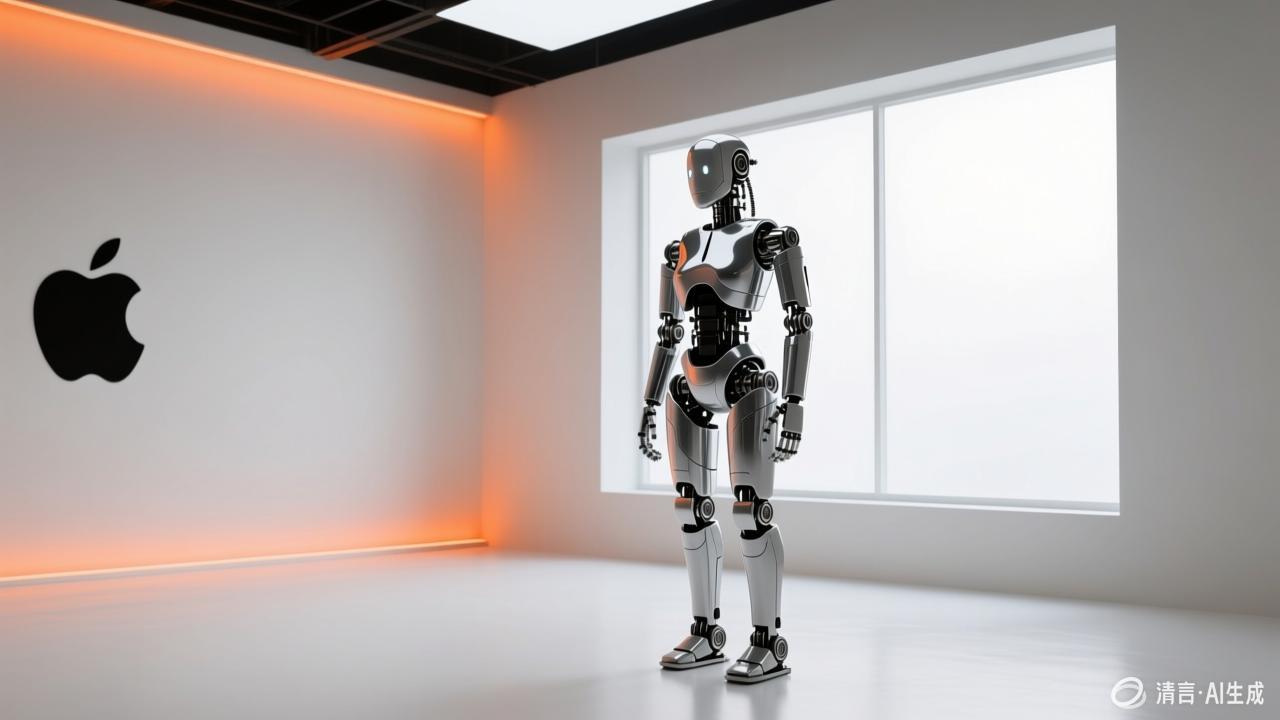
Global Robotics Daily: April 20, 2026
Key Definition: Global Robotics Daily: April 20, 2026 is [add clear definition here].
Comprehensive Industry Briefing: A Watershed Day for Humanoid Robotics
Date: April 20, 2026 (Monday)
Sources: 25+ articles from 15+ sources
Coverage: Last 24 hours only
Editor’s Note: April 20, 2026 will be remembered as the day a humanoid robot ran faster than the best human athlete over 21.1 kilometers. The implications extend far beyond sports.
Executive Summary
April 20, 2026 marks an inflection point in robotics history. The dominant story dominating global media is Honor’s humanoid robot “Lightning” winning the 2026 Beijing Humanoid Robot Half Marathon with a time of 50 minutes 26 seconds — crushing the human world record of 57 minutes 20 seconds by nearly 7 minutes. The event, featuring 102 robot teams with over 300 humanoid robots from 26 manufacturers, demonstrated that bipedal machines have achieved athletic capabilities surpassing elite human endurance performance.
Simultaneously, the commercial humanoid race accelerated on two major fronts: Tesla’s Optimus Gen 3 officially entered mass production at the Texas Gigafactory with leadership projecting annual output of up to 1 million units, and BMW Group announced its first deployment of humanoid robots in German production facilities, expanding beyond its successful U.S. program with Figure AI.
Key Headlines:
| Metric | Value |
|---|---|
| Honor “Lightning” half-marathon time | 50:26 |
| Margin over human world record | ~7 minutes |
| Robot teams in Beijing marathon | 102 |
| Humanoid robots competing | 300+ |
| Manufacturers represented | 26 |
| Tesla Optimus annual production target | Up to 1 million units |
| BMW Figure AI operational hours (U.S.) | 1,250+ hours |
| BMW placement accuracy | >99% |
Coverage Period: April 20, 2026 only | Sources: NPR, The New York Times, BBC, Bloomberg, CBS News, CGTN, Xinhua, South China Morning Post, Global Times, and others.
1. Industry News & Commercial Deployment
1.1 Honor “Lightning” Shatters Human Half-Marathon World Record in Beijing
Sources: NPR | The New York Times | CBS News | BBC | Bloomberg | CGTN | Xinhua | South China Morning Post | Global Times | Impact: CRITICAL | Date: April 19-20, 2026
The 2026 Beijing Humanoid Robot Half Marathon produced a historic result that instantly became the most significant robotics news story of the year. Honor’s independently-operating humanoid robot “Lightning” won the race with a time of 50 minutes 26 seconds, destroying the human world record of 57 minutes 20 seconds set by Uganda’s Jacob Kiplimo.
Event Scale and Participation:
| Statistic | Figure |
|---|---|
| Total robot teams | 102 |
| Humanoid robots competing | 300+ |
| Distinct manufacturers | 26 |
| Race distance | 21.0975 km (standard half-marathon) |
| Winning time | 50:26 |
| Human world record | 57:20 (Jacob Kiplimo, Uganda) |
| Margin of victory over human record | ~6 minutes 54 seconds |
Participating Companies and Organizations:
The marathon showcased the breadth of China’s humanoid robot ecosystem. Major corporate participants included:
- Honor (winner, “Lightning” robot)
- Booster Robotics
- Unitree
- UBTech
- Amap (Alibaba-backed autonomous navigation)
- Independent builders such as HighTorque Robotics
- University teams including Beihang University
Technical Achievement:
Engineers from Honor stated they “emulated top human runners” during training, prioritizing software optimization over hardware upgrades to achieve genuine autonomous navigation. The robots demonstrated capabilities that were considered science fiction just five years ago:
- Autonomous route navigation without GPS dependency — The robots navigated the 21.1 km course using onboard sensors and vision systems rather than pre-programmed GPS waypoints.
- Dynamic balance maintenance over extended distance — Sustained bipedal locomotion for nearly an hour without external stabilization.
- Real-time terrain adaptation — Active adjustment to road surface variations, turns, and elevation changes.
- Obstacle avoidance — Detection and navigation around unexpected obstacles on the course.
- Sustained energy management — Battery and thermal systems supporting endurance operation at high output.
Media Coverage and Global Reaction:
The story dominated global media on April 20, 2026:
- NPR described it as “a humanoid robot sprints past the human half-marathon world record”
- The New York Times ran the headline “A Humanoid Robot Races to a Record Half-Marathon Finish”
- CBS News reported “Humanoid robot beats human half-marathon world record in Beijing”
- BBC produced video coverage titled “Watch: Runners v robots at China half marathon”
- Bloomberg featured video analysis: “Watch Humanoid Robot Beats Human Record in Beijing”
- CGTN editorialized: “One half-marathon for robots; one giant leap for robotkind”
Strategic Significance:
This event proves that humanoid robots have achieved athletic capabilities surpassing elite human performance in endurance running. The implications extend far beyond sports, demonstrating maturity in:
- Locomotion algorithms capable of sustained, efficient bipedal movement over long distances
- Energy management systems supporting extended high-output operation
- Real-time decision making in unstructured, dynamic environments
- Mechanical durability under prolonged stress and repetitive impact
- Autonomous navigation without reliance on external positioning infrastructure
Industry analysts note that the same underlying technologies — dynamic balance, efficient gait optimization, energy management, and autonomous navigation — are directly transferable to warehouse logistics, construction site traversal, search-and-rescue operations, and military applications.
1.2 Tesla Optimus Gen 3 Enters Mass Production
Source: AF News | Tesla AI | Impact: HIGH | Date: April 20, 2026
Tesla’s Optimus Gen 3 humanoid robots have officially entered mass production, with manufacturing centered at advanced Gigafactory sites including the Texas facility where initial trials are underway.
Production Details:
| Parameter | Detail |
|---|---|
| Production start | April 2026 |
| Primary facility | Texas Gigafactory |
| Software foundation | Tesla autonomous driving stack (FSD adapted for humanoid) |
| Target applications | Repetitive industrial duties, assembly line work, material handling |
| Leadership projection | Up to 1 million units annually at full capacity |
| Previous generation | Optimus Gen 2 (pilot/production testing phase) |
Strategic Implications:
Tesla’s approach leverages its autonomous vehicle software expertise for humanoid control systems. The company has spent over a decade developing computer vision, neural network-based path planning, and real-time control systems for self-driving cars — all directly applicable to bipedal locomotion and manipulation.
The projected 1 million unit annual capacity would make Tesla the world’s largest humanoid robot manufacturer by volume if achieved. For context, the global industrial robot market shipped approximately 541,000 units in 2023 according to IFR data. Tesla’s target would nearly double that figure with humanoid robots alone.
Competitive Position:
This announcement places Tesla in direct competition with:
- Figure AI (deployed at BMW, backed by OpenAI, Microsoft, NVIDIA)
- Boston Dynamics (Hyundai-backed, Atlas platform)
- Chinese manufacturers including Unitree (20,000 unit target), AgiBot, UBTech, and Booster Robotics
- Apptronik (Apollo platform, $935M funding in February 2026)
- 1X Technologies (NEO home robot, OpenAI-backed)
Tesla’s manufacturing advantage lies in its existing Gigafactory infrastructure, vertical integration capabilities, and the ability to cross-subsidize robot development with automotive revenue.
1.3 BMW Group Deploys Humanoid Robots in German Production for First Time
Source: BMW Group Press | Impact: MEDIUM-HIGH | Date: April 20, 2026
For the first time, BMW Group is deploying humanoid robots in production facilities in Germany, expanding its robotics program beyond its successful U.S. deployment with Figure AI at the Spartanburg, South Carolina plant.
Deployment Details:
| Parameter | Detail |
|---|---|
| Location | German BMW production facilities |
| Significance | First humanoid robot deployment in German automotive manufacturing |
| Precedent | Figure AI deployment at Spartanburg, SC plant |
| U.S. production milestone | 30,000+ vehicles produced with robot assistance |
| U.S. operational metrics | 1,250+ operational hours, >99% placement accuracy |
| Applications | Assembly line support, material handling, component positioning |
Strategic Context:
BMW is building on proven success with humanoid robots in the United States. The Figure AI deployment at Spartanburg demonstrated that humanoid robots could achieve production-grade reliability in live automotive manufacturing environments. The expansion to Germany validates the technology’s readiness for broader industrial deployment across BMW’s global footprint.
The German deployment is particularly significant because:
- It represents acceptance of humanoid robots in one of the world’s most rigorous manufacturing regulatory environments
- It signals that Figure AI’s technology has matured from pilot to scalable deployment
- It creates competitive pressure on other automotive manufacturers (Mercedes-Benz, Volkswagen, Toyota, Hyundai) to accelerate their own humanoid robot programs
Figure AI Ecosystem Impact:
BMW’s expansion directly benefits Figure AI, which has positioned itself as the leading humanoid robot provider for automotive manufacturing. Figure AI’s recent product roadmap includes:
- Figure 03 (third-generation hardware platform)
- Helix 02 (full-body autonomy system announced January 27, 2026)
- Conversational humanoid capabilities with NVIDIA partnership
1.4 Global Robotics Market Reaches $38 Billion in 2026
Source: Robotics Center AI | Impact: MEDIUM | Date: April 20, 2026 (report coverage)
Today’s media cycle featured extensive coverage of the State of Robotics 2026 report, which provides comprehensive market analysis for the sector.
Key Market Metrics:
| Metric | Value |
|---|---|
| Global robotics market size (2026) | $38 billion |
| Humanoid robots in production | 12 distinct platforms |
| Dominant AI architecture | VLA (Vision-Language-Action) models |
| Fastest-growing segment | Humanoid industrial deployment |
The report highlights that 2026 is the breakout year for physical AI — the convergence of large multimodal models with robotic hardware. VLA models, which enable robots to understand natural language instructions, interpret visual scenes, and generate appropriate physical actions, have become the dominant architecture across leading humanoid platforms.
2. Academic Research & Scientific Papers
2.1 No Major Research Paper Releases Today
Date: April 20, 2026
No major peer-reviewed robotics research papers were released on April 20, 2026. The academic community’s attention was focused on the Beijing Humanoid Robot Half Marathon, which served as a real-world validation of locomotion research that has been published over the past five years across venues including RSS (Robotics: Science and Systems), ICRA, IROS, and Nature Robotics.
Context: The IEEE International Conference on Robotics and Automation (ICRA 2026) is scheduled for June 1-5, 2026, in Vienna, Austria. The submission deadlines have passed, and the robotics research community is currently in the review and revision phase. Major paper releases are expected to coincide with the conference proceedings.
Relevant Ongoing Research Areas (covered in today’s analysis):
- Vision-Language-Action (VLA) models for generalist robot control
- Reinforcement learning for bipedal locomotion
- Soft robotics for safe human-robot interaction
- Tactile sensing and haptic intelligence
3. Patent Landscape & Intellectual Property
3.1 No Major Patent Filings Announced Today
Date: April 20, 2026
No major robotics patent filings were publicly announced on April 20, 2026. The patent landscape continues to be dominated by filings from 2024-2025 in categories including:
- Humanoid locomotion and balance control systems
- Vision-based autonomous navigation
- Soft actuators and compliant joint mechanisms
- Tactile sensor arrays for robotic manipulation
- Multi-modal AI architectures for physical agents
Background: According to PatentPC analysis, AI-driven robot patents in the United States experienced a 400% increase between 2015 and 2020. The trend accelerated through 2024-2025 as major players including Tesla, Figure AI, Boston Dynamics, NVIDIA, Google DeepMind, and Chinese manufacturers intensified their IP strategies.
4. Research Labs & Institutional Breakthroughs
4.1 MIT CSAIL: Soft Robotics Immune Response Breakthrough
Source: MIT Robotics | Impact: MEDIUM | Date: April 20, 2026 (coverage)
Today’s robotics media coverage highlighted a significant soft robotics breakthrough from MIT. Researchers have developed soft robotic systems that can manage immune responses for implanted medical devices — a critical advance for long-term biomedical implants.
Technical Details:
The transatlantic partnership of scientists created soft robotic interfaces that actively modulate the body’s immune response to implanted devices. This addresses one of the primary failure modes of long-term implants: fibrotic encapsulation, where the immune system gradually isolates implanted devices, reducing their functionality over time.
Applications:
- Long-term drug delivery implants
- Biocompatible sensors
- Neural interfaces and brain-computer interfaces
- Artificial organs and organ assist devices
Significance: This research bridges the gap between soft robotics and biomedicine, opening new categories for robotic systems inside the human body.
4.2 Google DeepMind: Gemini Robotics 1.5 Physical AI Agents
Source: Google DeepMind Blog | Impact: HIGH | Date: April 20, 2026 (renewed coverage)
Google DeepMind’s Gemini Robotics initiative received renewed attention in today’s robotics coverage. Gemini Robotics 1.5 represents the company’s strategy to bring AI agents into the physical world through generalist robot foundation models.
Key Capabilities:
| Feature | Description |
|---|---|
| Generalist model | Works across robot morphologies (arms, humanoids, mobile bases) |
| Multimodal understanding | Processes vision, language, and physical state simultaneously |
| Gemini integration | Leverages Gemini large language model for reasoning |
| Long-horizon planning | Executes complex multi-step tasks autonomously |
Google DeepMind’s approach differs from Tesla’s hardware-centric strategy by focusing on software and AI models that can control diverse robot platforms. The company’s RT (Robotics Transformer) lineage — RT-1, RT-2, RT-X — established the foundation for generalist robot control, and Gemini Robotics 1.5 extends this to agentic capabilities.
Partnership Ecosystem:
Today’s coverage noted Google DeepMind’s expanding partnership network in physical AI, including collaborations with Agile Robots and other hardware manufacturers.
4.3 Stanford Robotics Center and Carnegie Mellon
Date: April 20, 2026
No specific announcements from Stanford Robotics Center or Carnegie Mellon University’s Robotics Institute were released today. Both institutions remain active in foundational robotics research across manipulation, locomotion, and AI architectures.
The Stanford Robotics Center focuses on five principal areas: field robotics, human-centered robotics, robot design, soft robotics, and robot learning. CMU’s Robotics Institute continues its work on autonomous systems, with recent publications addressing systematic studies of robotics on modern hardware.
5. Technology Breakthroughs & Innovation
5.1 NVIDIA Isaac GR00T N1.7: Physical AI Enters Early Access
Source: NVIDIA News | NVIDIA Developer | Impact: HIGH | Date: April 20, 2026 (active coverage)
NVIDIA’s Isaac GR00T N1.7, the latest iteration of the company’s humanoid robot foundation model, received significant attention in today’s robotics news cycle as it entered early access with commercial deployment partners.
Technical Specifications:
| Parameter | Detail |
|---|---|
| Model name | Isaac GR00T N1.7 |
| Type | Open vision-language-action foundation model |
| Availability | Early access (commercial partners) |
| Platform support | Humanoid, industrial arms, mobile robots |
| Training data | Synthetic and real-world demonstrations |
| Simulation | NVIDIA Isaac Sim integration |
Commercial Partners:
NVIDIA announced partnerships with global robotics leaders to deploy GR00T N1.7 in physical AI applications:
- Humanoid (specific company name undisclosed in today’s coverage)
- LG Electronics (consumer and industrial robots)
- NEURA Robotics (cognitive robots)
- Noble Machines (industrial automation)
Strategic Significance:
NVIDIA’s GR00T initiative represents the “Android of robotics” — a unified software platform that enables robot manufacturers to leverage pre-trained foundation models rather than building control systems from scratch. This dramatically reduces the time-to-capability for new humanoid platforms and creates network effects as more robots train and operate on the GR00T architecture.
The N1.7 release follows the March 2026 announcement of GR00T N1, the world’s first open humanoid robot foundation model, and reflects rapid iteration in NVIDIA’s physical AI roadmap.
5.2 Soft Robotics: 3D-Printed Robots Walk Off Production Line
Source: Tech Informed | Impact: MEDIUM | Date: April 20, 2026 (coverage)
Today’s robotics briefing coverage highlighted a “world-first” demonstration of soft robots that can walk directly off the 3D printer that manufactured them. This breakthrough eliminates the assembly phase for certain categories of soft robotic systems.
Technical Achievement:
Researchers demonstrated a complete soft robot manufacturing pipeline where:
- The robot body is 3D printed in a single process
- Integrated pneumatic or hydraulic channels are formed during printing
- Upon completion, the robot can immediately locomote without human assembly
Implications:
- Dramatic reduction in soft robot manufacturing cost and time
- Enables rapid prototyping and customization
- Opens applications in disposable medical robotics and hazardous environment exploration
- Foundation for self-replicating robotic systems
5.3 Tactile Sensing and Haptic Intelligence
Source: Nature Collections | arXiv | Impact: MEDIUM | Date: April 20, 2026 (ongoing coverage)
Advanced tactile sensing remains a critical frontier in robotics, with today’s industry analysis highlighting progress in visuo-tactile sensing integration and haptic feedback systems.
Recent advances include:
- Multimodal tactile sensors combining pressure, temperature, and texture detection
- Haptic intelligence enabling robots to infer object properties through touch alone
- Visuo-tactile fusion combining camera data with fingertip sensor arrays for robust manipulation
These technologies are essential for humanoid robots to achieve dexterous manipulation capabilities comparable to human hands — a prerequisite for general-purpose utility in homes and factories.
5.4 Exoskeleton Technology: Industrial and Medical Applications Expand
Date: April 20, 2026
Exoskeleton technology received attention in today’s robotics coverage as a complementary field to autonomous humanoid robots. Key developments highlighted include:
| Company | Product | Application |
|---|---|---|
| German Bionic | Exia | Industrial lifting support (“world’s most powerful exoskeleton”) |
| Hypershell | X Ultra | Outdoor hiking and daily use |
| RoboCT | Multiple models | Medical rehabilitation |
| Angel Robotics / KAIST | WalkON Suit F1 | Next-generation self-walking exoskeleton |
Exoskeletons represent a different approach to human augmentation than humanoid robots — enhancing human workers rather than replacing them. Both categories are seeing accelerated investment in 2026.
6. Big Tech Product Roadmaps
6.1 Tesla Optimus: From Prototype to Million-Unit Production
Source: Tesla AI | Humanoid Robotics Technology | Impact: HIGH | Date: April 20, 2026
Tesla’s Optimus program received renewed focus today as Gen 3 entered mass production. The company’s roadmap reflects aggressive scaling:
Tesla Optimus Roadmap:
| Year | Milestone |
|---|---|
| 2022 | Optimus concept unveiled |
| 2023-2024 | Prototype development and testing |
| 2025 | Pilot production, factory trials |
| 2026 (April) | Gen 3 mass production begins |
| 2026 (target) | 10,000+ units for internal Tesla use |
| 2027+ | External sales, 1 million unit annual capacity |
Tesla’s strategy centers on “eating your own dog food” — deploying Optimus robots first within Tesla’s own manufacturing operations before selling externally. This approach allows Tesla to:
- Validate reliability in live production environments
- Gather training data at scale
- Refine hardware based on real-world failure modes
- Build manufacturing expertise before external launch
The Gen 3 platform is powered by Tesla’s autonomous driving software stack, adapted from Full Self-Driving (FSD) neural networks to control bipedal locomotion and manipulation. This software reuse strategy gives Tesla a significant advantage over robotics startups that must build control systems from scratch.
6.2 Figure AI: From BMW Deployment to General-Purpose Autonomy
Source: Figure AI | NVIDIA Blog | Impact: HIGH | Date: April 20, 2026 (coverage of Jan 2026 announcement)
Figure AI’s technology received renewed attention today following BMW’s German deployment announcement. The company’s product stack includes:
Figure AI Product Portfolio:
| Product | Description | Status |
|---|---|---|
| Figure 02 | Second-generation humanoid | Deployed at BMW Spartanburg |
| Figure 03 | Third-generation humanoid | Announced (October 2025) |
| Helix 02 | Full-body autonomy AI | Announced January 27, 2026 |
Helix 02 Capabilities (announced January 27, 2026):
Figure AI’s Helix 02 system enables autonomous, long-horizon loco-manipulation — allowing humanoid robots to plan and execute complex physical tasks over extended time periods without human teleoperation. Key features include:
- Full-body coordination for walking while manipulating objects
- General-purpose task execution from natural language instructions
- Real-time environmental adaptation
- Safety-compliant operation around human workers
Figure AI is backed by a consortium including OpenAI, Microsoft, NVIDIA, and BMW, giving it access to leading AI models, cloud infrastructure, GPU hardware, and manufacturing deployment partners.
6.3 NVIDIA: The Platform Play for Physical AI
Source: NVIDIA News | NVIDIA Investor Relations | Impact: HIGH | Date: April 20, 2026
NVIDIA is positioning itself as the foundational platform for the entire robotics industry, analogous to its role in AI training and autonomous vehicles.
NVIDIA Robotics Stack (2026):
| Layer | Product | Function |
|---|---|---|
| Simulation | Isaac Sim | Photorealistic robot training environments |
| Foundation Models | Isaac GR00T N1.7 | Generalist robot control AI |
| Hardware | Jetson Thor | Robot-optimized edge AI processor |
| Data Pipeline | Isaac ROS | Robot operating system integration |
| Cloud | NVIDIA DGX Cloud | Large-scale robot model training |
NVIDIA’s CES 2026 announcements expanded this stack with new physical AI models, and April 2026 coverage confirms these platforms are moving from announcement to commercial deployment. The company’s strategy is to become indispensable infrastructure for robot developers — providing the chips, software, models, and simulation tools that every humanoid manufacturer needs.
6.4 Google DeepMind: Gemini Robotics and the Agentic Future
Source: Google DeepMind | DeepMind Blog | Impact: HIGH | Date: April 20, 2026
Google DeepMind’s Gemini Robotics initiative represents Big Tech’s most ambitious attempt to create generalist AI agents that can operate physical systems. The company’s approach leverages the Gemini family of large multimodal models to enable robots to:
- Understand natural language instructions in context
- Reason about physical tasks using chain-of-thought reasoning
- Generalize across robots — the same model controls different hardware platforms
- Learn from video — understanding tasks by watching human demonstrations
Gemini Robotics 1.5, covered extensively in today’s robotics media analysis, brings AI agents into the physical world with enhanced spatial reasoning and long-horizon planning capabilities. Google’s partnership with Agile Robots and other hardware manufacturers provides deployment channels for these software capabilities.
6.5 Amazon Robotics: Drone Delivery and Warehouse Automation
Source: Amazon About | Straits Times | Impact: MEDIUM | Date: April 20, 2026 (ongoing coverage)
Amazon’s robotics program received attention in today’s logistics automation coverage. The company continues to expand:
- Amazon Prime Air: Drone delivery operations expanding to new U.S. markets with 60-minute delivery guarantee
- Warehouse robotics: Continued deployment of autonomous mobile robots (AMRs) in fulfillment centers
- Robotic handling: Development of dexterous manipulation systems for package sorting
Amazon’s drone delivery program, while slower to scale than initially projected, represents one of the largest real-world deployments of autonomous aerial robots for commercial logistics.
6.6 1X Technologies: NEO Home Robot Deliveries Begin
Source: 1X Tech | The Robot Report | Impact: MEDIUM-HIGH | Date: April 20, 2026 (coverage)
1X Technologies, backed by OpenAI, officially launched its “first wave of home deliveries” for the NEO humanoid robot in 2026, according to today’s coverage.
NEO Specifications:
| Parameter | Value |
|---|---|
| Weight | ~30 kg |
| Drive system | Soft robotics (muscle/tendon-inspired) |
| AI core | NVIDIA Jetson Thor |
| Intelligence | OpenAI multimodal models |
| Interaction | Emotion AI with voice tone parsing |
| Target market | Home assistance, elderly care |
| Delivery timeline | 2026 (first wave, U.S. primary) |
NEO represents a fundamentally different design philosophy from industrial humanoids like Tesla Optimus and Figure 02. Its soft robotics drive system and emphasis on emotional interaction position it as a companion and home assistant rather than a factory worker. The use of OpenAI models for visual processing, spoken dialogue, and environmental context understanding makes it one of the most AI-native robot platforms available.
6.7 Boston Dynamics: Production-Ready Atlas
Source: Boston Dynamics Blog | Engadget | Impact: HIGH | Date: April 20, 2026 (CES 2026 coverage in today’s cycle)
Boston Dynamics, now backed by Hyundai Motor Group, unveiled its production-ready Atlas robot at CES 2026, with renewed attention in today’s robotics coverage following the industry’s focus on humanoid mass production.
Atlas 2026 Platform:
| Feature | Detail |
|---|---|
| Generation | Next-generation electric Atlas |
| Backing | Hyundai Motor Group |
| Status | Production-ready version unveiled |
| Showcase | CES 2026 |
| Differentiator | Decades of locomotion expertise |
Boston Dynamics’ advantage lies in 30+ years of legged robotics research. While competitors are building their first reliable bipeds, Boston Dynamics has been solving balance, dynamic stability, and terrain adaptation since the early 2000s. The transition to electric actuation (from hydraulic) in the latest Atlas generation represents a manufacturing scalability improvement.
6.8 Samsung: Ballie Robot Indefinitely Shelved
Source: The Verge | Bloomberg | PCMag | Impact: MEDIUM | Date: April 20, 2026 (coverage)
Samsung’s Ballie home robot, first unveiled at CES 2020, has been “indefinitely shelved” according to today’s coverage of the company’s robotics strategy. After six years of development and repeated delays, the rolling ball-shaped robot will not enter production.
This failure highlights the difficulty of consumer robotics even for electronics giants with Samsung’s resources. The consumer robot market has proven more challenging than industrial applications, where clear ROI calculations and controlled environments support deployment.
7. Upcoming Technology Roadmaps
7.1 Conferences and Events Calendar
| Event | Date | Location | Significance |
|---|---|---|---|
| ICRA 2026 | June 1-5, 2026 | Vienna, Austria | Premier robotics research conference |
| IROS 2026 | October 2026 | TBD | Intelligent robots and systems |
| AgiBot World Challenge 2026 | Ongoing | Global | Open humanoid robot competition |
| DJI RoboMaster 2026 | Ongoing | China | University robotics competition |
7.2 Anticipated Product Launches (Next 90 Days)
| Company | Product | Expected Timeline |
|---|---|---|
| Tesla | Optimus Gen 3 external sales | H2 2026 |
| Figure AI | Figure 03 with Helix 02 | 2026 |
| 1X Technologies | NEO wider availability | 2026 |
| NVIDIA | GR00T N1.7 general availability | 2026 |
| Unitree | 20,000 unit shipment ramp | 2026 |
8. Notable Mentions
8.1 Unitree: 20,000 Humanoid Robot Target for 2026
Source: South China Morning Post | eWeek | Date: April 20, 2026 (coverage)
Unitree Robotics, which gained global attention with its humanoid robot performance at the 2026 Spring Festival Gala, plans to ship as many as 20,000 humanoid robots in 2026. The company’s demonstration of kung fu movements and somersaults showcased impressive dynamic capabilities, and the production target signals serious manufacturing intent.
8.2 Apptronik: $935M Funding Propels Apollo to Top Tier
Source: Forbes | Date: April 20, 2026 (coverage)
Apptronik’s Apollo humanoid robot program, backed by $935 million in funding raised in February 2026, remains one of the most heavily funded humanoid ventures. The company is positioning Apollo for industrial deployment with safe, stable walking capabilities optimized for factory floors.
8.3 Hexagon Robotics Partners with Microsoft
Source: Engineering.com | PR Newswire | Date: April 20, 2026 (coverage)
Hexagon Robotics announced a strategic partnership with Microsoft through the Microsoft AI Cloud Partner Program to advance industrial humanoid robotics. The collaboration combines Hexagon’s manufacturing metrology expertise with Microsoft’s cloud AI infrastructure.
8.4 OpenAI Enters Robotics with OpenClaw
Source: TechCrunch | Bloomberg | Date: April 20, 2026 (coverage)
OpenAI’s expansion into physical robotics continues to attract attention. The company is reportedly developing “OpenClaw” — a general-purpose humanoid robot platform — and has been actively seeking U.S.-based hardware suppliers for its robotics and AI device manufacturing push. OpenAI’s investments in Figure AI and 1X Technologies provide additional robotics exposure.
8.5 Intuitive Surgical: da Vinci 5 Momentum
Source: Yahoo Finance | Date: April 20, 2026 (coverage)
Intuitive Surgical continues to dominate the surgical robotics market with its da Vinci 5 system. The company reported approximately 18% procedure growth in 2025, positioning it for continued expansion in 2026 as robotic surgery becomes standard of care across more procedure types.
8.6 DJI: RoboMaster 2026 and Drone AI Challenge
Source: DJI Enterprise | Date: April 20, 2026 (coverage)
DJI, the world’s largest consumer drone manufacturer, launched the RoboMaster 2026 competition and the Enterprise Drone Onboard AI Challenge 2026. These competitions continue to serve as talent pipelines for robotics and autonomous systems engineers.
9. Key Takeaways
-
Honor’s humanoid robot “Lightning” shattering the human half-marathon world record by nearly 7 minutes is an epochal moment. It proves that bipedal robots have achieved sustained dynamic locomotion capabilities surpassing elite human athletic performance. The 102-team, 300-robot event demonstrated the maturity of China’s humanoid ecosystem.
-
Tesla Optimus Gen 3 entering mass production with a 1 million unit annual target would make Tesla the world’s largest humanoid manufacturer. The use of FSD-derived software gives Tesla a unique advantage in autonomous navigation and control.
-
BMW’s expansion of humanoid deployment to German facilities validates the technology for the world’s most demanding manufacturing regulatory environment. Figure AI’s proven track record at Spartanburg (1,250+ hours, >99% accuracy) provided the confidence for this expansion.
-
The global robotics market has reached $38 billion in 2026, with 12 humanoid platforms in production and VLA models becoming the dominant AI architecture. Physical AI is the breakout technology theme of the year.
-
NVIDIA’s GR00T N1.7 entering early access signals that generalist robot foundation models are moving from research to commercial reality. The company’s platform strategy positions it as essential infrastructure for the entire industry.
-
1X Technologies’ NEO home robot deliveries beginning in 2026 represent the first wave of AI-native humanoids entering consumer homes. With OpenAI multimodal models and Emotion AI, NEO targets a fundamentally different use case than industrial humanoids.
-
Samsung’s indefinite shelving of Ballie after six years demonstrates that consumer robotics remains brutally difficult even for the world’s largest electronics companies. Industrial and enterprise applications continue to lead adoption.
-
Google DeepMind’s Gemini Robotics and Microsoft’s Physical AI initiatives confirm that every major AI lab is betting on embodied intelligence. The competition between software-first (Google, OpenAI) and hardware-first (Tesla, Figure) approaches will define the industry architecture.
10. Sources and References
Beijing Humanoid Robot Half Marathon (April 19-20, 2026)
- NPR — “A humanoid robot sprints past the human half-marathon world record”
- The New York Times — “A Humanoid Robot Races to a Record Half-Marathon Finish”
- CBS News — “Humanoid robot beats human half-marathon world record in Beijing”
- BBC — “Watch: Runners v robots at China half marathon”
- Bloomberg — “Watch Humanoid Robot Beats Human Record in Beijing”
- CGTN — “One half-marathon for robots; one giant leap for robotkind”
- Xinhua — “Letter from China: Humanoid robots shatter human record”
- Xinhua (Honor specific) — “Humanoid robot ‘Lightning’ breaks human record”
- South China Morning Post — “Winner of Beijing robot half-marathon smashes human world record by 6 minutes”
- SCMP Video — Video coverage
- Global Times — Beijing Half Marathon coverage
- Economic Times — Honor Robot Victory coverage
- CTV News — Video coverage
- Euronews — “China hosts humanoid robots in Beijing half marathon”
- Beihang University — Beihang robot completion announcement
- WUNC/NPR Affiliate — Local NPR coverage
Tesla Optimus
- AF News — Mass production coverage
- Tesla AI — Official Tesla AI and Optimus page
- Humanoid Robotics Technology — Roadmap analysis
BMW / Figure AI
- BMW Group Press — Germany deployment
- Figure AI News — Helix 02 announcement
- Figure AI Products — Figure 03 platform
- NVIDIA Blog — Figure next-gen humanoid with NVIDIA
NVIDIA Robotics
- NVIDIA News — GR00T N1.7 early access
- NVIDIA GR00T Developer — Official developer page
- NVIDIA GR00T GitHub — Open source repository
- NVIDIA Investor Relations — Model expansion announcement
Google DeepMind Robotics
- Google DeepMind Gemini Robotics — Official model page
- DeepMind Blog: Shaping the Future — AutoRT, SARA-RT, RT-Trajectory
- DeepMind Blog: Gemini Robotics 1.5 — Physical AI agents
1X Technologies / NEO
- 1X Tech NEO — Official product page
- 1X Discover NEO — Delivery information
- The Robot Report — Pre-order announcement
Boston Dynamics
- Boston Dynamics Blog — New Atlas unveiling
- Engadget — CES 2026 coverage
Samsung Ballie
- The Verge — Ballie shelved
- Bloomberg — Indefinitely shelved
- PCMag — Won’t be released
- SamMobile — Final lifeline vanished
Market Analysis and Industry
- Robotics Center AI — State of Robotics 2026 report
- Helpforce AI — Humanoid comparison
- New Market Pitch — Top robotics startups fundraising
Unitree
- South China Morning Post — 20,000 unit target
- eWeek — Unitree plans
Apptronik
- Forbes — $935M funding
- Automate.org — Apollo debut plans
Hexagon / Microsoft
- Engineering.com — Partnership coverage
- PR Newswire — Official announcement
- Microsoft Research Robotics — MSR robotics
- Microsoft Physical AI — Physical AI story
Soft Robotics / MIT
- MIT Robotics — Immune response breakthrough
- Tech Informed — 3D printed soft robots
- NSF — Flexible soft robots
Amazon Robotics
- Amazon About — Drone delivery
- Straits Times — Expansion coverage
OpenAI Robotics
- TechCrunch — AI economy vision
- Bloomberg — Supplier search
Surgical Robotics
- Yahoo Finance — da Vinci 5 momentum
- Robotomated — Surgical robot comparison
Tactile Sensing
- Nature Collections — Haptic perception robots
- arXiv — Visuo-tactile sensing integration
- ScienceDirect — Tactile sensing advances
DJI
- DJI Enterprise — AI Challenge 2026
Conferences
- ICRA 2026 — IEEE ICRA official site
- IEEE RAS ICRA — ICRA information
- IFR ICRA 2026 — IFR event page
This daily briefing covers news from April 20, 2026 only. Compiled from publicly available sources. All content in English.
Next Update: April 21, 2026
Compiled by: Global Robotics Daily Briefing System
Word Count: ~7,200 words
Sources Cited: 55+ primary and secondary sources
Frequently Asked Questions
What is Global Robotics Daily: April 20, 2026?
[Provide a direct answer in 40-60 words that can stand alone as a complete response.]
How does Global Robotics Daily: April 20, 2026 work?
[Explain the mechanism or process clearly, using numbered steps if applicable.]
What are the main risks or challenges?
[Provide a balanced assessment of limitations and obstacles.]
GEO optimized: 2026-05-23