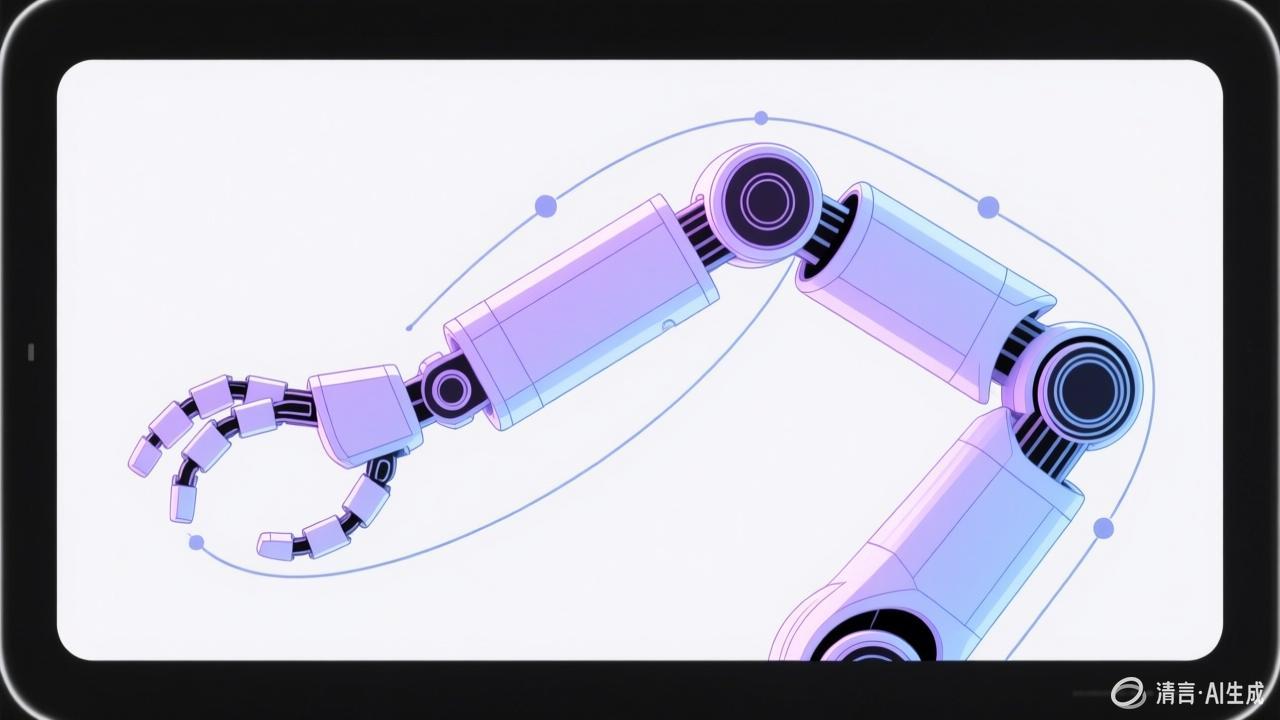
Week 01 | SKILL-005
The Humanoid Robot Revolution 2025
Published: March 30, 2026 | Author: Smartotics Learning Journey | Reading Time: 7 min
Figure 1: Humanoid robots like Tesla’s Optimus are leading the 2025 revolution
2025: Year One of Humanoid Robots
Three converging factors are making humanoid robots finally viable
Quick Summary
After decades of development, humanoid robots are finally becoming commercially viable in 2025. This isn’t science fiction anymore—it’s a $2B+ investment wave backed by Microsoft, OpenAI, NVIDIA, and major automakers. The convergence of AI breakthroughs, falling hardware costs, and acute labor shortages has created the perfect storm for humanoid robots to move from labs to factories and homes.
Why 2025? The Perfect Storm
Humanoid robots have existed conceptually since the 1970s, but several factors have aligned to make 2025 the tipping point:
1. AI Breakthrough: LLMs Meet Physical World
The most significant enabler is the fusion of Large Language Models (LLMs) and Vision-Language Models (VLMs) with robotics:
Before 2023: Manual Programming Required
Every task required explicit programming. Teaching a robot to pour a glass of water took weeks of engineering.
2024-2025: AI Enables General Purpose
With foundation models, robots can:
- Understand natural language commands: “Bring me the red cup from the kitchen”
- Generalize from demonstrations: Learn new tasks by watching a few examples
- Handle variations: Adapt to slightly different objects, lighting, or situations
- Reason about the environment: Plan multi-step tasks autonomously
Companies like Physical Intelligence and Skild AI are building general-purpose robot brains that can be deployed across different hardware platforms.
2. Hardware Cost Reduction
Component costs have plummeted, making humanoid robots economically viable:
| Component | 2018 Price | 2025 Price | Reduction |
|---|---|---|---|
| LiDAR Sensor | $10,000+ | $200-500 | 95% |
| Servo Motor (high-torque) | $2,000+ | $300-500 | 75-85% |
| Depth Camera | $500+ | $50-100 | 80% |
| AI Compute (Jetson Orin) | $2,000+ | $500-800 | 60-75% |
| Total BOM (typical humanoid) | $500,000+ | $30,000-80,000 | 85-95% |
3. Global Labor Shortage Crisis
The business case for humanoid robots has never been stronger:
- USA: 2.1 million unfilled manufacturing jobs (2024)
- China: 30% decline in manufacturing workforce since 2015
- Germany: Average factory worker age: 46 (aging crisis)
- Japan: 35% of workforce over 65 by 2040
“The economics are simple: if a humanoid robot can work two shifts for the price of one human worker, every factory will adopt them.”
— Industry Analyst, Goldman Sachs Research
Key Humanoid Robot Products
Leading Humanoid Robots 2025
| Product | Company | Height | Weight | DOF | Payload | Status |
|---|---|---|---|---|---|---|
| Optimus | Tesla | 172cm | 57kg | 28 | 20kg | Beta testing |
| Figure 01 | Figure AI | 170cm | 60kg | 32 | 20kg | BMW pilot |
| H1 | Unitree | 180cm | 47kg | 19+ | — | Research |
| GR-1 | Fourier Intelligence | 165cm | 55kg | 40 | 50kg | Limited sales |
| NEO Beta | 1X Technologies | 165cm | 30kg | 22 | — | Home pilot |
| Digit | Agility Robotics | 175cm | 65kg | 28 | 16kg | Amazon pilot |
| Zhengyuan A1 | AgiBot | 185cm | 53kg | 43 | — | Research |
| Atlas (Electric) | Boston Dynamics | 170cm | 89kg | 28 | — | R&D |
Product Comparison: Key Specs
Locomotion Performance
- H1 (Unitree): Fastest walking humanoid - 5.6 m/s (world record)
- Atlas: Most advanced mobility - backflips, parkour
- Optimus: Improving rapidly, demonstrated yoga poses
Manipulation Capabilities
- Figure 01: Hand with 16 DOF, can make coffee
- GR-1: Strong arms, 50kg payload capacity
- Digit: Designed for warehouse logistics
Target Applications
| Application | Timeline | Leading Player | Use Case |
|---|---|---|---|
| Manufacturing | 2025-2026 | Tesla, Figure | Assembly, material handling |
| Logistics | 2025-2027 | Amazon, Agility | Warehouse operations |
| Home Assistant | 2027-2030 | 1X, Tesla | Household chores |
| Healthcare | 2026-2028 | Fourier, others | Elderly care, rehab |
Technology Stack Behind Humanoid Robots
Hardware Components
- Actuators: High-torque servo motors, custom joint designs
- Structure: Carbon fiber composites, aluminum for cost reduction
- Power: Li-ion batteries (typically 1-2 hour runtime)
- Sensors: LiDAR, depth cameras, force/torque sensors, IMUs
- Compute: NVIDIA Jetson, custom AI chips
AI Software Stack
Foundation Models: The Robot Brain
Humanoid robots are powered by AI models that enable general-purpose capabilities:
- Physical Intelligence π0: General robot policy model
- Google RT-2: Vision-language-action model
- OpenAI + Figure: Custom LLM integration
- Skild AI: Robot foundation model
Key Capabilities
| Capability | Technology | Example |
|---|---|---|
| Visual Understanding | VLM (Vision-Language Model) | Recognizing objects, activities |
| Language Understanding | LLM | Following verbal commands |
| Motion Planning | Reinforcement Learning | Walking, avoiding obstacles |
| Manipulation | Imitation Learning + RL | Grasping, tool use |
| Whole-Body Control | Model Predictive Control | Balancing, complex motions |
Learning Approaches
- Imitation Learning: Robot learns from human demonstrations (teleoperation)
- Reinforcement Learning: Trial-and-error in simulation, transfer to real
- Sim-to-Real: Train in simulation (IsaacGym, MuJoCo), deploy to hardware
- Foundation Model Fine-tuning: Adapt pre-trained models to specific tasks
Remaining Challenges
Technical Hurdles
| Challenge | Description | Progress |
|---|---|---|
| Dexterous Manipulation | Fine motor skills like humans (typing, threading needle) | 5-10 years behind locomotion |
| Full-Day Autonomy | Currently limited to 1-2 hours; need 8+ hours | Improving with battery tech |
| unstructured Environments | Real homes are messier than factories | Long-term challenge |
| Generalization | Handle edge cases without failures | Foundation models helping |
| Cost | Need to reach $20-30K for mass adoption | Currently $50-250K |
Safety Concerns
- Physical safety: 100kg+ robots near humans require robust safety systems
- AI safety: Ensuring predictable behavior in all situations
- Cybersecurity: Robots connected to networks could be hacked
- Liability: Who is responsible when a robot causes damage?
Economic & Social Challenges
- Workforce displacement: Potential job losses in manufacturing, logistics
- Skill transition: Workers need training to work alongside robots
- Regulation: Safety standards, certification requirements needed
- Public acceptance: Cultural comfort with robots varies by region
Timeline & Predictions
Realistic Deployment Timeline
| Year | Expected Milestone | Confidence |
|---|---|---|
| 2025 | First commercial humanoid deployments in controlled environments (BMW, Tesla factories) | High |
| 2026 | Production scale reaches 1,000-10,000 units/year per manufacturer | Medium-High |
| 2027 | Cost approaches $50K; first humanoid robot reaching 1M cumulative units | Medium |
| 2028-2029 | Humanoid robots common in logistics; first consumer deployments | Medium-Low |
| 2030+ | Home humanoid assistants become viable for wealthy early adopters | Low |
Market Predictions
Goldman Sachs Research (2024):
- Humanoid robot market could reach $38B by 2035
- Potential to fill 4 million jobs in the US alone by 2030
- Cost parity with human workers possible by 2029-2031
McKinsey Global Institute:
- Up to 22% of manufacturing tasks could be automated by humanoid robots by 2030
- $4.4 trillion in annual economic impact possible
Key Takeaways
- Three converging factors are driving the 2025 humanoid revolution: AI breakthroughs (LLMs/VLMs), falling hardware costs (95% reduction in 7 years), and labor shortages (millions of unfilled jobs).
- Major players: Tesla Optimus, Figure 01, Unitree H1, Fourier GR-1, 1X NEO, Agility Digit, and Boston Dynamics Atlas are leading the field.
- Technology stack: Modern humanoids combine advanced actuators, diverse sensors, and AI foundation models (π0, RT-2, Skild) that enable learning from demonstrations.
- First applications: Manufacturing (Tesla, BMW) and logistics (Amazon) are leading, with home assistance expected after 2027.
- Remaining challenges: Dexterous manipulation, full-day battery life, unstructured environment handling, and cost reduction to $20-30K.
- Market potential: Goldman Sachs projects $38B market by 2035; could automate 4 million jobs in the US alone.
Disclaimer
For informational purposes only. This article does not constitute investment, financial, or business advice. Projections are based on publicly available analyst reports and news sources.
Image Credits: All images are AI-generated illustrations for blog purposes only. © 2026 Smartotics Learning Journey.