Week 01 | SKILL-002
Robot Classification System: A Complete Guide
Published: March 27, 2026 | Author: Smartotics Learning Journey | Reading Time: 6 min
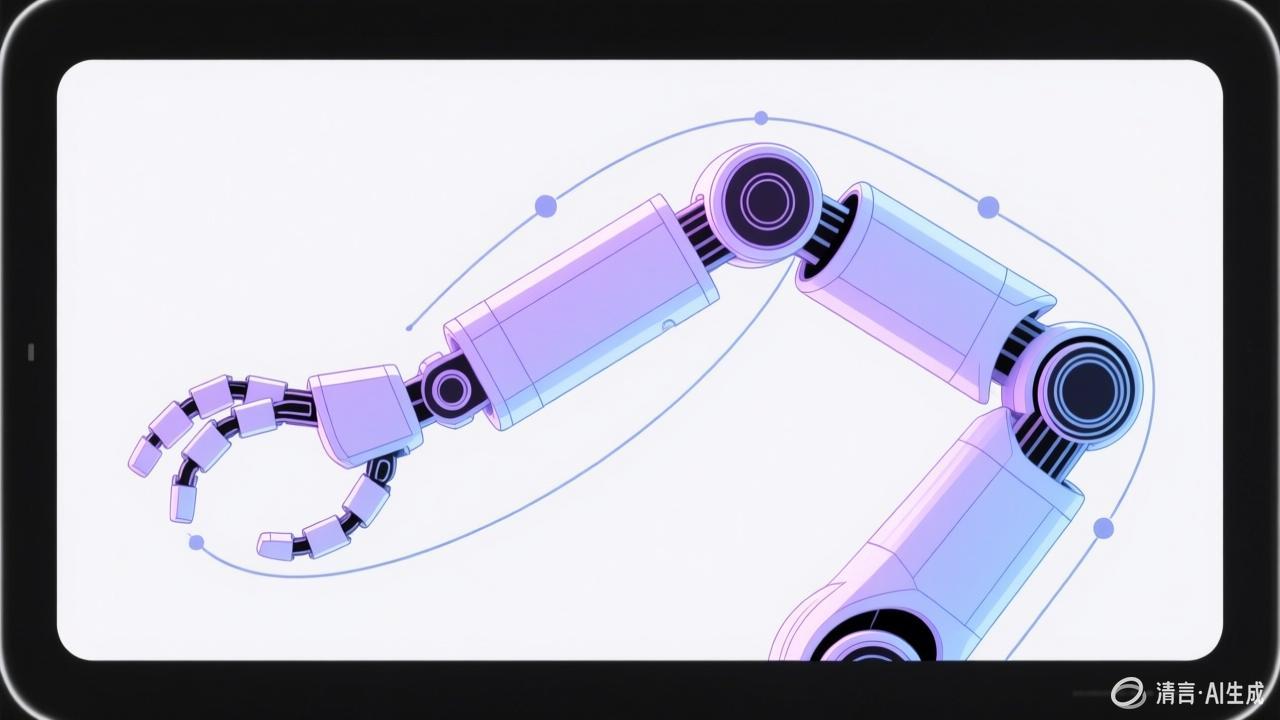
Figure 1: Robots are classified by their application domains and capabilities
Quick Summary
Understanding robot classification is essential for anyone entering robotics. Robots can be broadly categorized into Industrial Robots (manufacturing automation), Service Robots (human assistance), and Special Purpose Robots (extreme environments). Each category has distinct characteristics, market leaders, and technology requirements. This article provides a comprehensive framework for understanding and categorizing any robot system.
The Classification Framework
How do we systematically classify robots? The most widely accepted approach is based on application domain and intended use. This framework, endorsed by the International Federation of Robotics (IFR), divides robots into three primary categories:
The IFR Classification System
- Industrial Robots: Automated machines used in manufacturing environments
- Service Robots: Machines that assist humans in non-industrial tasks
- Special Purpose Robots: Robots designed for specific, often extreme, environments
This classification matters because each category has different:
- Technology requirements (sensors, actuators, computing)
- Market dynamics and competition
- Learning paths and skill requirements
- Business models and growth potential
Industrial Robots
Industrial robots are the backbone of modern manufacturing. The IFR defines an industrial robot as:
“An automatically controlled, reprogrammable, multipurpose manipulator programmable in three or more axes, which may be either fixed in place or mobile for use in industrial automation applications.”
Major Industrial Robot Types
| Type | Structure | Key Characteristics | Primary Applications |
|---|---|---|---|
| Articulated | Rotary joints (2-6 axes) | Maximum flexibility, widest range of motion | Welding, painting, assembly, material handling |
| SCARA | Cylindrical, parallel axes | Fast, precise in horizontal plane, compliant | Pick and place, PCB assembly, packaging |
| Delta | Parallel arms, spider-like | Extremely fast, limited workspace | High-speed packaging, food industry, electronics |
| Cartesian | Linear axes (X, Y, Z) | Simple, accurate, large workspace | 3D printing, CNC, pick and place, assembly |
| Cylindrical | Rotary + linear base | Good for round workspaces | Machine tending, spot welding, assembly |
| Collaborative (Cobot) | Any structure + safety | Safe for human interaction, easy programming | Human-robot collaboration, small batch production |
Leading Industrial Robot Manufacturers
| Company | Country | Flagship Products | Market Position |
|---|---|---|---|
| FANUC | Japan | M-20iD, R-2000, CRX | Global #1 in industrial robots |
| ABB | Switzerland | YuMi, IRB 6700, GoFa | Leader in collaborative robots |
| KUKA | Germany | KR AGILUS, LBR iiwa | Strong in automotive |
| Yaskawa | Japan | MOTOMAN series | Global top 3 |
| Kawasaki | Japan | RS series, duAro | Strong in Asia |
Understanding DOF (Degrees of Freedom)
DOF is crucial for understanding robot capability. It represents the number of independent movements a robot can make:
- 3 DOF: Can position in 3D space (X, Y, Z)
- 4 DOF: Adds rotation (yaw)
- 5 DOF: Adds pitch control
- 6 DOF: Full spatial control (like human arm)
- 7+ DOF: Redundant control (exceeds human arm flexibility)
Service Robots
Service robots represent the fastest-growing category. Unlike industrial robots, they interact directly with humans in everyday environments. The IFR defines service robots as:
“A robot that operates semi- or fully autonomously to perform services useful to the well-being of humans and equipment, excluding manufacturing operations.”
Service Robot Subcategories
Personal/Domestic Service Robots
- Floor cleaning: iRobot Roomba, Roborock (most successful consumer robots)
- Lawn mowing: Husqvarna Automower
- Pool cleaning: Dolphin robotic cleaners
- Education: LEGO Mindstorms, makeblock, Vector
- Companion: Sony Aibo, Joy for Pets
Professional Service Robots
| Category | Examples | Growth Drivers |
|---|---|---|
| Medical/Surgical | Da Vinci Surgical System, Mako, Rosa | Aging population, precision surgery demand |
| Logistics/AMR | Geek+, Kiva/Amazon, OTTO | E-commerce growth, warehouse automation |
| Agricultural | DJI Agras drones, Harvest Automation | Labor shortages, precision farming |
| Inspection/Monitoring | Infrastructure drones, security robots | Safety concerns, cost reduction |
| Hospitality | Reception robots, concierge bots | Service industry labor shortage |
AMR vs AGV: Key Distinction
Understanding the difference between Autonomous Mobile Robots (AMR) and Automated Guided Vehicles (AGV) is essential:
| Feature | AGV | AMR |
|---|---|---|
| Navigation | Fixed paths (magnetic, wire) | Dynamic, autonomous path planning |
| Flexibility | Low - requires infrastructure changes | High - adapts to environment |
| Cost | Lower initial, higher for changes | Higher initial, lower long-term |
| Safety | Basic sensors, stops on contact | Advanced sensors, obstacle avoidance |
| Example | Warehouse tugger vehicles | Geek+ Robot fleet, Kiva pods |
Special Purpose Robots
Special purpose robots are designed for specific tasks in environments where humans cannot easily operate. This category spans extreme environments, specialized operations, and emerging applications.
Major Categories
1. Unmanned Aerial Vehicles (UAV/Drones)
- Consumer: DJI Mavic, Mini series (photography, recreation)
- Agricultural: DJI Agras, XAG (crop spraying, monitoring)
- Industrial: DJI M300 RTK (mapping, inspection, surveying)
- Military: MQ-9 Reaper, various reconnaissance drones
2. Underwater Robots
- ROV (Remotely Operated): Tethered, operator-controlled (oil rig inspection)
- AUV (Autonomous): Self-navigating (ocean floor mapping)
- Hybrid: Can switch between modes (submarine drones)
3. Space Robots
- Mars Rovers: Perseverance, Curiosity (NASA), Tianwen-1 (China)
- ISS Robots: Robonaut, Astrobee (station maintenance)
- Satellite Servicing: SpaceX Starlink, NASA’s Restore-L
4. Disaster Response Robots
- Search and Rescue: Snake robots, tracked rescue bots
- Firefighting: Thermite robot, aerial firefighting drones
- Hazmat: Nuclear decommissioning robots, chemical detection
5. Emerging Categories
- Exoskeletons: Rehabilitation (Cyberdyne HAL), industrial (Sarcos)
- Self-Driving Vehicles: Waymo, Cruise, Baidu Apollo
- Micro/Nano Robots: Medical drug delivery, precision assembly
Analysis & My Assessment
Market Comparison
The global robot market segmentation reveals interesting insights:
| Category | 2024 Market Size | Growth Rate (CAGR) | Key Driver |
|---|---|---|---|
| Industrial Robots | $45B | 8-10% | Manufacturing automation |
| Service Robots | $30B | 20-25% | Labor shortages, AI advances |
| Special Purpose | $3B | 15-18% | Niche applications |
| Total | $78B | 15-20% | — |
Emerging Classification: Humanoid Robots
A new category is emerging that bridges multiple domains: humanoid robots. These robots combine:
- Industrial-grade precision (manipulation)
- Service robot human-interaction capabilities
- Special purpose adaptability (home, factory, outdoor)
This convergence is why 2025 is considered the Year One of Humanoid Robots.
Why This Classification Matters for Learning
Understanding robot classification helps you:
- Focus your learning: Each category requires different skills
- Identify opportunities: Service robots are growing fastest
- Connect the ecosystem: Hardware, software, and AI cross all categories
Key Takeaways
- Three primary categories: Industrial (manufacturing), Service (human assistance), and Special Purpose (extreme environments).
- Industrial robots are classified by structure: Articulated, SCARA, Delta, Cartesian, Cylindrical, and Collaborative (Cobot).
- Service robots split into Personal (consumer) and Professional (business), with AMR vs AGV being a key distinction in logistics.
- Special purpose robots include drones, underwater robots, space robots, and disaster response systems designed for extreme environments.
- Humanoid robots represent a new convergence category that blurs traditional boundaries.
- Market growth: Service robots (20-25% CAGR) are growing faster than industrial robots (8-10% CAGR), offering more opportunities.
Disclaimer
For informational purposes only. This article does not constitute investment, financial, or business advice. All information is based on publicly available sources and the author’s personal learning perspective.
Image Credits: All images are AI-generated illustrations for blog purposes only. © 2026 Smartotics Learning Journey.